

.png)
.png)
.png)
.png)
.png)
.jpg)
.jpg)
.png)
.png)
.png)


ISO 27001 Certified

GDPR Compliant
.png)
Net Worth Statement Template for Family Offices (Download for Free)
A clear, fillable net worth statement template for principals, trustees, and family office finance teams. Download free, complete the asset and liability tables, and generate a printable personal net worth statement for banks or diligence. Built for controlled external use with versioning, valuation dates, FX methodology, and entity look-through. Point in time view only; not tax or legal advice.
“Over the years we’ve invested significantly in our field data team - focusing on producing trusted ratings. While this ensures the accuracy of our Ratings, it doesn’t allow the scale across the thousands of projects that buyers are considering.”

For more information on carbon credit procurement trends, read our "Key Takeaways for 2025" article. We share five, data-backed tips to improve your procurement strategy.

One more thing: Connect to Supply customers also get access to the rest of Sylvera's tools. That means you can easily see project ratings and evaluate an individual project's strengths, procure quality carbon credits, and even monitor project activity (particularly if you’ve invested at the pre-issuance stage.)
Book a free demo of Sylvera to see our platform's procurement and reporting features in action.
A net worth statement is a consolidated statement of financial position for a person, family, or holding group. It lists total assets and total liabilities, then calculates total net worth. For UHNW wealth management, this statement of net worth template supports banking, lending, insurance, and diligence by providing a single, accurate snapshot that is supported by dated sources, a valuation basis, and documented assumptions.
This is an informational, point-in-time view. It is not a tax or legal document. Where any conflict arises, your legal and tax documents prevail.
Single family offices, multi family offices, principals, and trustees who need a clean, shareable record. It also serves as a business net worth statement template for holding companies and SPVs. Designed to be completed as personal, joint, and entity-by-entity schedules, so you can present a personal net worth statement for a single principal or a combined personal financial statement for a couple or family unit.
.webp)
A single document designed for print or on-screen completion.
Inside the document:
The design uses clean tables that print well on A4 or US Letter. Banks like this printable personal net worth statement template because it reads like a personal balance sheet and includes a clear list of liabilities.
Use this checklist to build a clean, defensible snapshot of your holdings. Work from current statements and governing documents so owners, entities, and values tie out.
Tips: use standard financial labels, attach valuation notes or appraisals, and set a monthly reminder to keep data current. If you work with spreadsheets, keep it as a working file and copy values into the document for a clean presentation.

Use this as a quick quality test. In a family office context, good means a clear, reconciled, and governed record that covers ownership and look-through, valuation and FX, liabilities and collateral, version control, confidentiality and sign off, an evidence index, and recourse treatment.
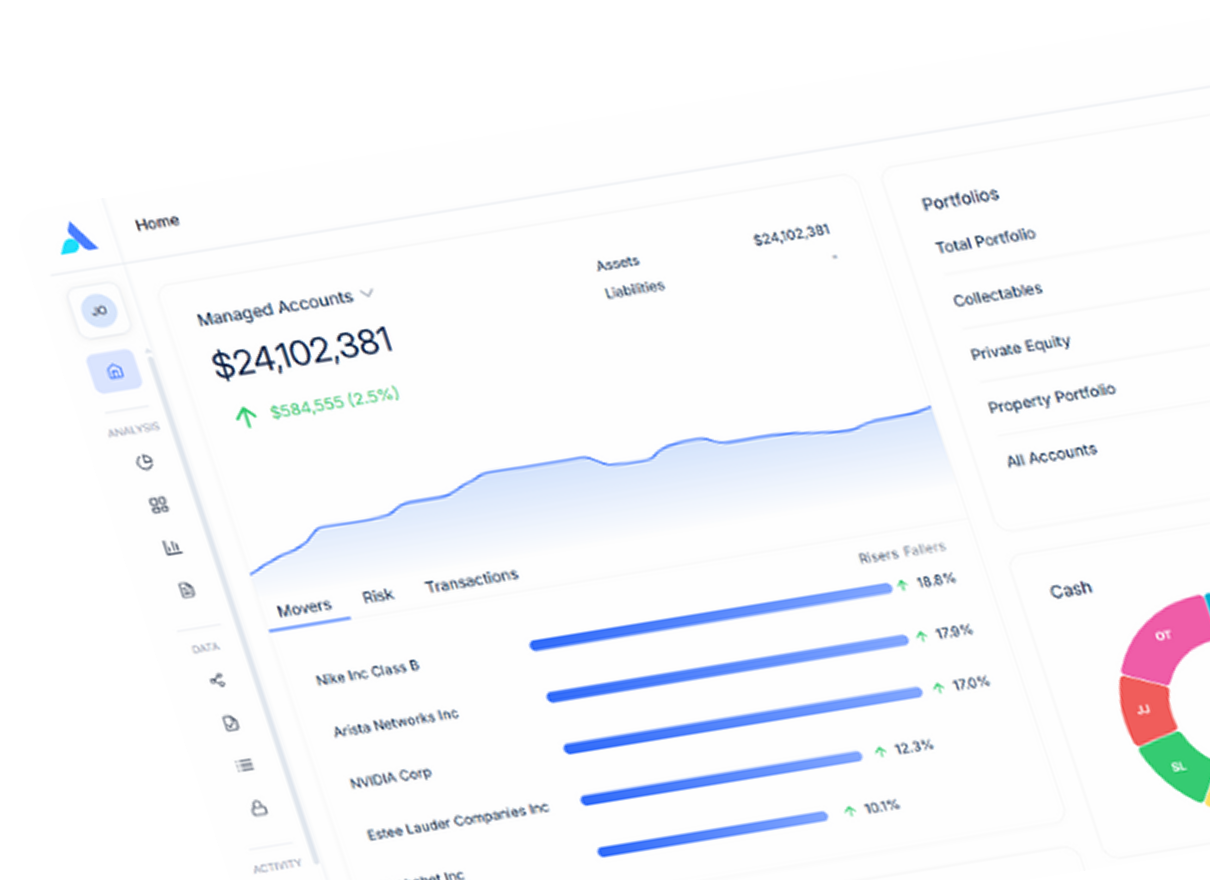
In Asora, you do not need a template. The net worth dashboard pulls balances, ownership, and source documents automatically. Your statement lives in Documents and stays linked to the right entities, trusts, and supporting files, so anyone who needs context can find it with a click. The ownership picture remains consistent in the Wealth Map, which means principals and trustees are always looking at the same structure.
Because reporting is centralised, bank and custodian balances are included alongside private assets and FX, with timely updates. The same data underpins meeting notes, task checklists, and review dates, so what you discuss is reflected in the numbers.
When you want a view, the family office dashboards provide a clear balance sheet at a glance. Use the Owner Selector to switch between people and entities, drill into allocation, risk, and liquidity, then open the Statement of Assets and Liabilities. Save views or export to Word or PDF, and jump to the Wealth Map for look through context.
See your net worth in Asora. Book a 15-minute demo.
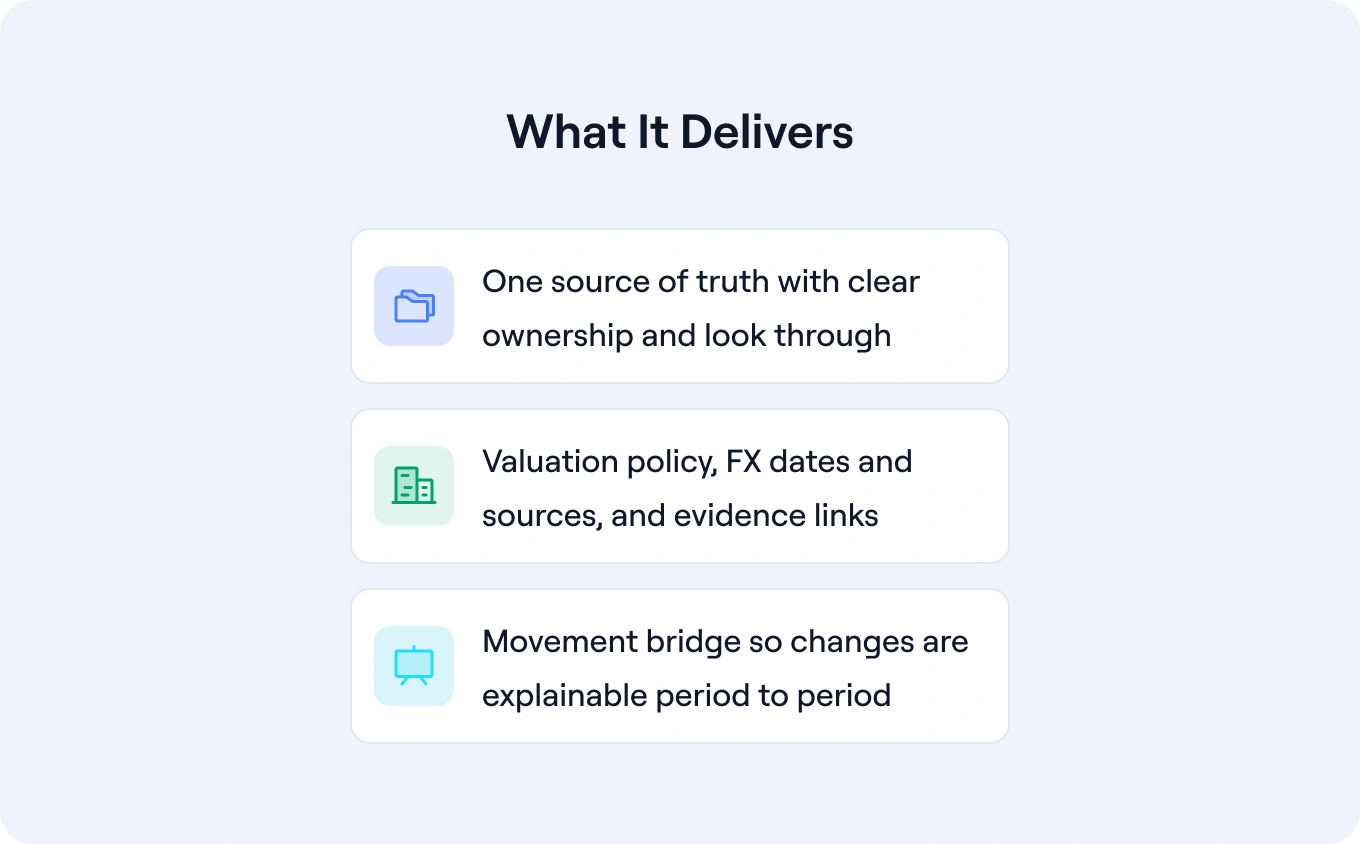
Families need a defensible, decision-ready view of money, assets, and debt. This net worth template creates a clear balance sheet with documented assumptions that works across public markets, private funds, real estate, and operating interests.
Primary use cases
What it delivers
What to prioritize
How to use it
Calculate assets minus liabilities, then track the change over time. Keep the presentation simple and attach supporting schedules only where required. For lender or diligence packs, include the document, a budget and cash flow, and short notes on assumptions. The goal is accuracy and speed, so stakeholders can align on the same numbers and act with confidence.
Tips: use standard financial labels, attach valuation notes or appraisals, and set a monthly reminder to keep data current. If you work with spreadsheets, keep it as a working file and copy values into the document for a clean presentation.
Complete the fields, then export or print the net worth statement template for banks or for diligence.

Yes. This is a free net worth statement template you can download and complete on screen or by hand. When you need working formulas or charts, you can keep a parallel spreadsheet in Excel or Google Sheets and copy the final numbers into the document for a clean presentation of your personal financial statement or consolidated family view.
Yes. The template serves as a business net worth statement by pairing the Entities Register with the Ownership Look-Through page, so equity can be traced from owner to entity to asset. You then present consolidated assets and liabilities with a single net worth summary that reflects the whole structure.
Yes. Banks often accept a concise, table-based net worth statement as an initial Personal Financial Statement if it’s backed by current brokerage/custody statements, appraisals, and facility documents. For formal underwriting, many lenders will require their own PFS form with signed attestations and may request additional schedules, such as commitments, guarantees, liquidity details, and collateral ties.
Yes. You record assets and debts in their original currencies and convert them on the FX page using a clearly stated source and valuation-date rate. This approach maintains consistency in the net worth calculation and avoids mixing rates across periods.
No. The template provides an informational snapshot for planning and reporting, but your legal, tax, and regulatory documents always prevail. Binding terms come from trust deeds, loan agreements, and tax filings, not from this net worth statement template.