





Automate your family office
Schedule DemoTL;DR
Family offices with multi-entity structures and multi-custodian portfolios need consolidated reporting software that goes beyond spreadsheets. This guide compares four financial consolidation and reporting tools that suit different needs depending on portfolio complexity and reporting requirements.
From Spreadsheets to Platforms
Family offices today face growing complexity in managing wealth across multiple entities, custodians, currencies, and asset classes. Spreadsheets and manual processes can't keep pace. They're time-consuming, error-prone, and difficult to scale as portfolios grow.
That’s why family offices are turning to dedicated consolidated financial reporting software. These platforms centralize bank and custodian feeds, cleanse and standardize records for consolidation, and surface timely insights via configurable dashboards and reports.
This guide compares four consolidated reporting platforms:
- Asora
- Masttro
- Landytech
- Microsoft Excel
We'll break down their strengths, regional coverage, core capabilities, and ideal use cases to help you identify which financial consolidation and reporting software fits your office's needs.
Why Family Offices Need Consolidated Financial Reporting Software
Compared to many operating companies, family offices often manage uniquely complex structures, often spanning trusts, foundations, holding companies, and operating entities, with differing tax, legal, and reporting requirements depending on jurisdiction and entity type.
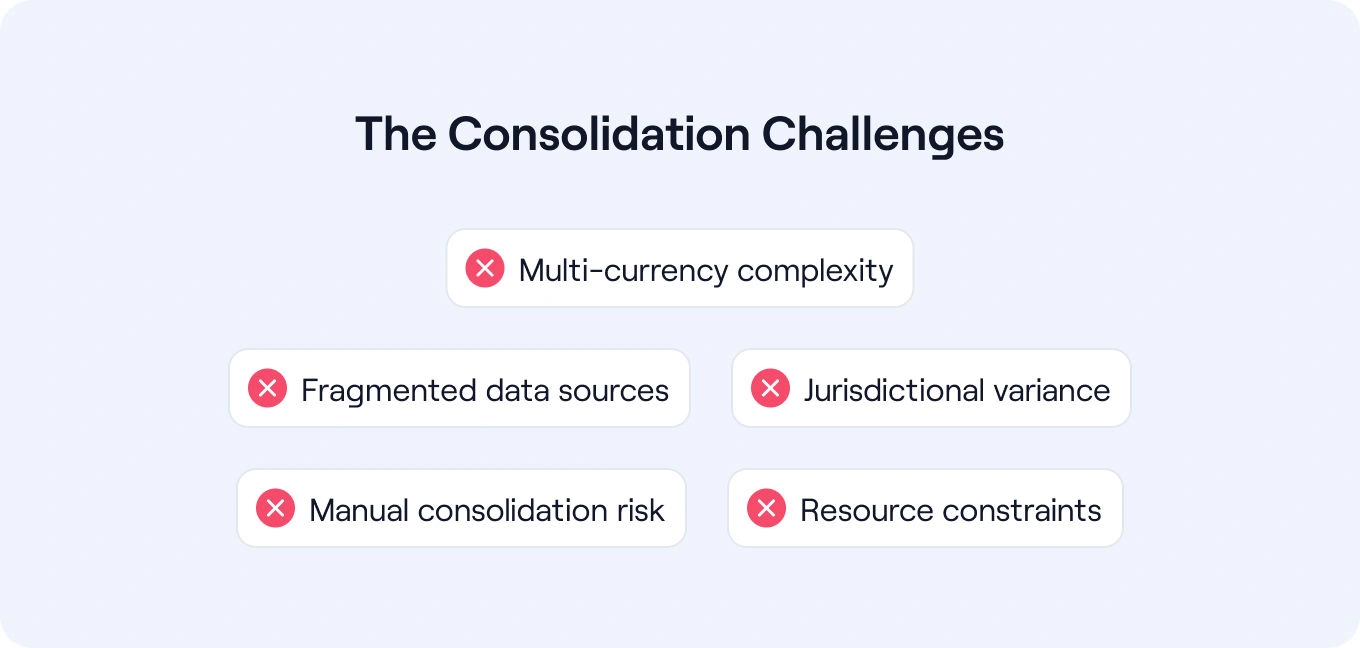
The consolidation challenge:
- Multiple currencies across banking relationships and private investments
- Fragmented data sources scattered across PDFs, portals, and spreadsheets
- Jurisdictional differences create reporting challenges, requiring consistent FX treatment, chart-of-accounts mapping, and entity roll-ups while external firms handle GAAP/IFRS compliance.
- Manual financial data consolidation increases the chance of human error
- Limited internal resources carrying the burden of monthly/quarterly reporting cycle
Many family offices still rely on spreadsheets to piece together consolidated financial statements, but that’s time-consuming, error-prone, and doesn't scale as the family's wealth grows. For offices managing global operations, producing accurate reporting across entities and asset types becomes increasingly complex.
This complexity slows the ability to generate timely consolidated financial reports, especially when preparing for board meetings, tax filings, or strategic reviews. This leads to increased operational risk and a financial reporting process that can't keep pace with the family's evolving needs.
Modern consolidated reporting software addresses these challenges by:
- Automating data collection from custodians and banks
- Handling currency conversions automatically
- Delivering management-level entity rollups and look-through views that tag and segregate intercompany flows for external GAAP/IFRS elimination during the statutory close
- Ensuring consistency across all reports
- Reducing manual touchpoints that introduce errors
- Accelerating the financial close process
Top 4 Consolidated Reporting Software for 2026
Modern family offices need software solutions that unify financial records, support stakeholder reporting, and connect financial planning with day-to-day reporting, so financial performance is clear across entities. The picks below prioritize tools that make this seamless.
1. Asora: Purpose-Built for Modern Family Offices
Year founded: 2021 | Pricing: $$
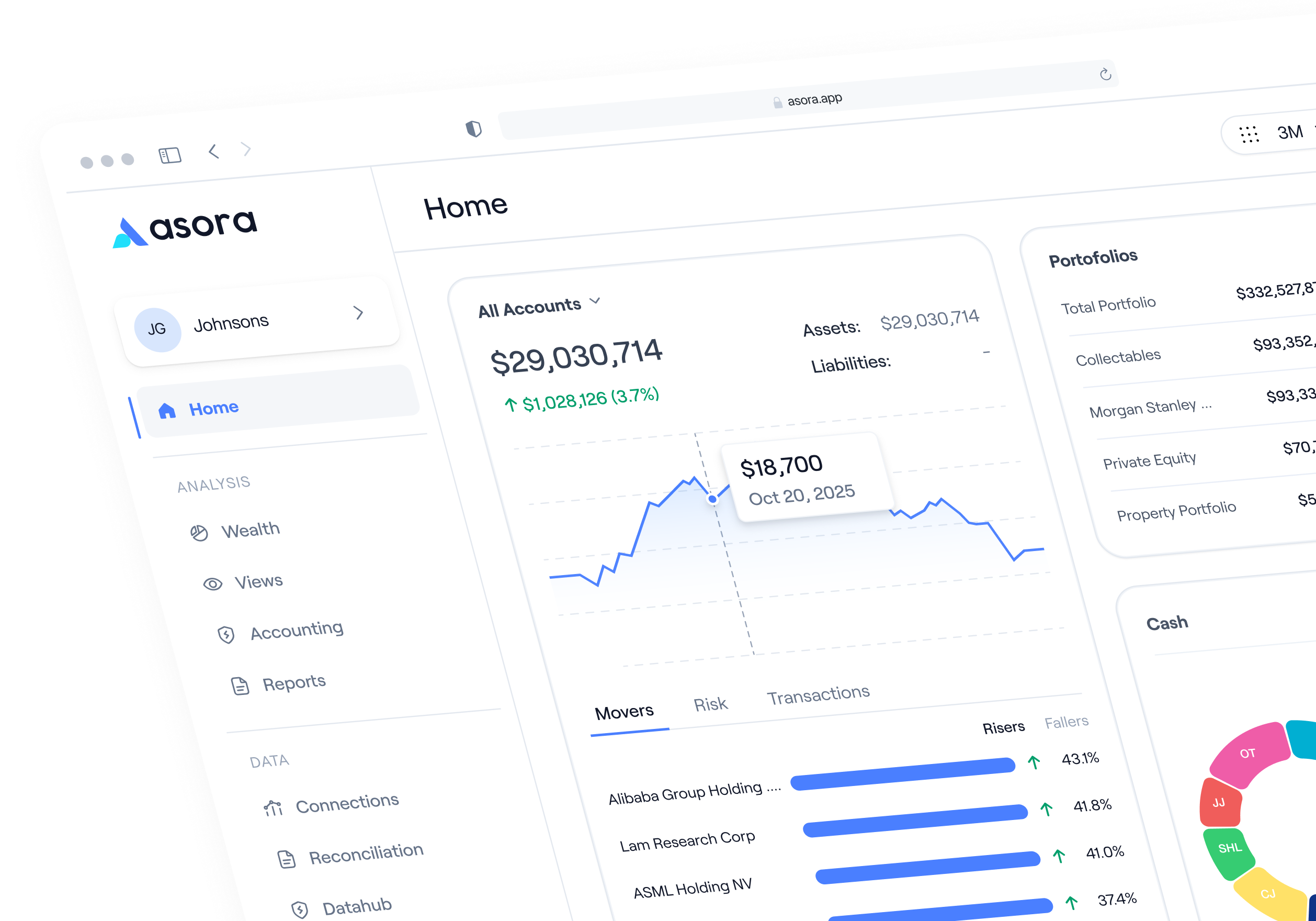
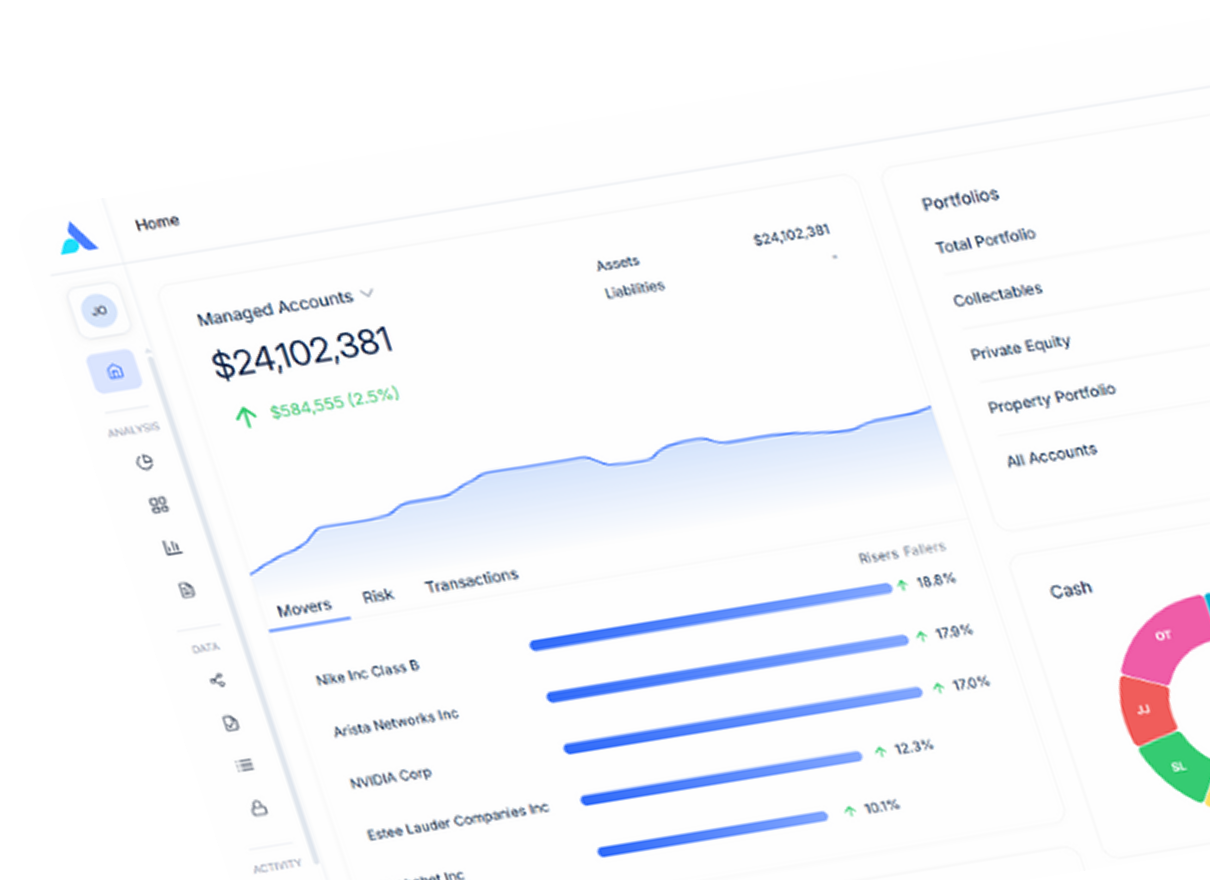
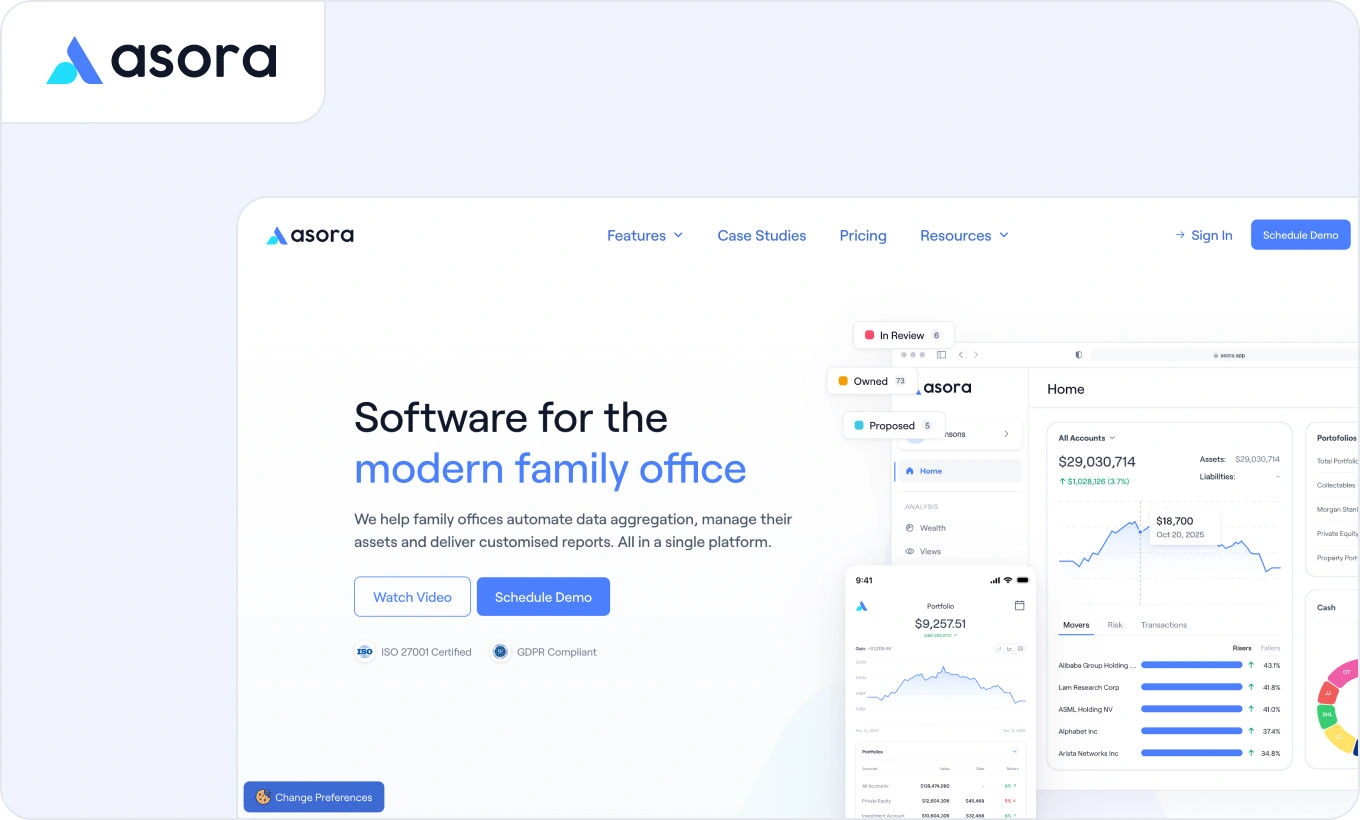
Asora is purpose-built family office software designed for single-family offices, multi-family offices, UHNWIs, and wealth managers. The platform replaces spreadsheets with timely, structured reporting across all asset classes.
- Best for: Lean single-family offices and UHNW principals managing multi-entity, multi-asset portfolios (public + private) who want fast implementation, clear consolidated reporting, and secure workflows without enterprise bloat.
- Core Client Segment: Single-family offices, multi-family offices, UHNWIs, wealth managers
- Regional Coverage: North America, Latin America, Europe, Middle East & Africa, Asia Pacific
- Security & Privacy: GDPR, ISO27001
Key Features & Capabilities:
- Data Aggregation: Automated connections to banks and custodians
- Consolidated Reporting: On-demand financial reporting across multiple entities and asset classes
- Performance Reporting: Time-weighted returns, IRR, and MOIC calculations
- PDF Reporting: Generate shareable reports in seconds
- Dashboards: Timely visibility into portfolio performance and net worth
- Document Management: Secure central vault for all financial documents
- Wealth Map: Visual representation of ownership across trusts, entities, and assets
- Pipeline Tracking: Monitor potential deals through due diligence
- Task Management: Centralized workflows
- Mobile Access: iOS and Android apps for on-the-go portfolio access
2. Masttro: Enterprise-Grade for Complex Portfolios
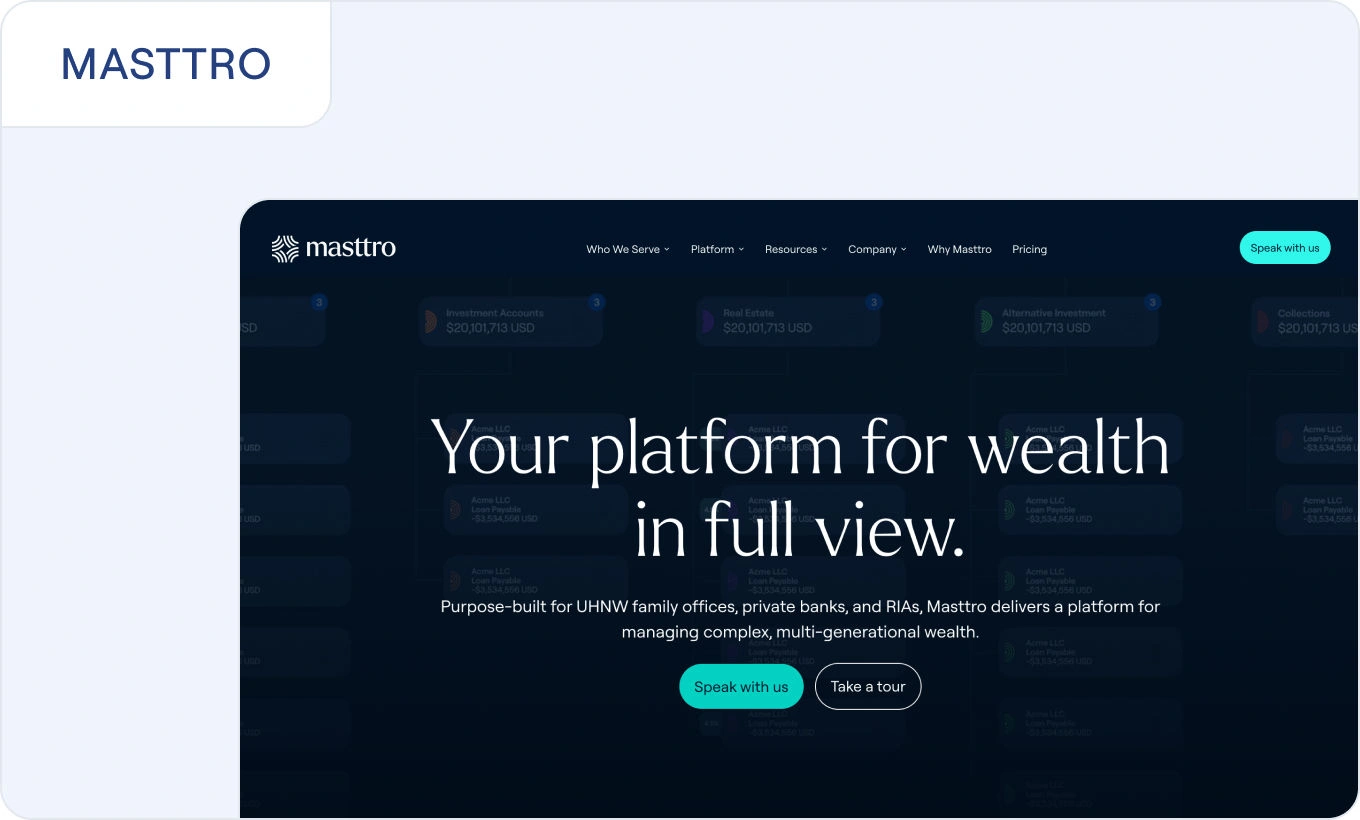
Year founded: 2010 | Pricing: $$$$
Masttro serves family offices and wealth managers managing layered ownership structures and large volumes of financial documents. The platform combines AI-powered document automation with secure data aggregation.
- Best for: Best for multi-entity, multi-custodian, document-heavy environments
- Core Client Segment: Single-family offices, multi-family offices, wealth advisors
- Regional Coverage: North America, Latin America, Europe, Middle East & Africa
- Security & Privacy: ISO 27001, Cloud Control Matrix (CCM), and GDPR
Key Features & Capabilities:
- Data Aggregation: 650+ direct custodian feeds with daily updates
- Consolidated Reporting: Multi-entity financial reporting with customizable outputs
- Performance Reporting: Portfolio analytics and consolidated performance tracking
- PDF Reporting: Automated report generation and distribution
- Dashboards: Real-time portfolio monitoring with 24/7 monitoring and alerting
- Documents AI: Automated document processing and capital call reconciliation
- Investment Analytics: Analysis and reporting tools
- Risk Analytics: Comprehensive risk monitoring and exposure management
- Global Wealth Map: Interactive visualization of entities and ownership
- Cash Flow Forecasting: Cash Management Registry for tracking deposits, withdrawals, and balances
- Masttro Intelligence: AI-powered data consolidation and analysis
- Task Management: Workflow automation and collaboration tools
3. Landytech: Performance Analytics
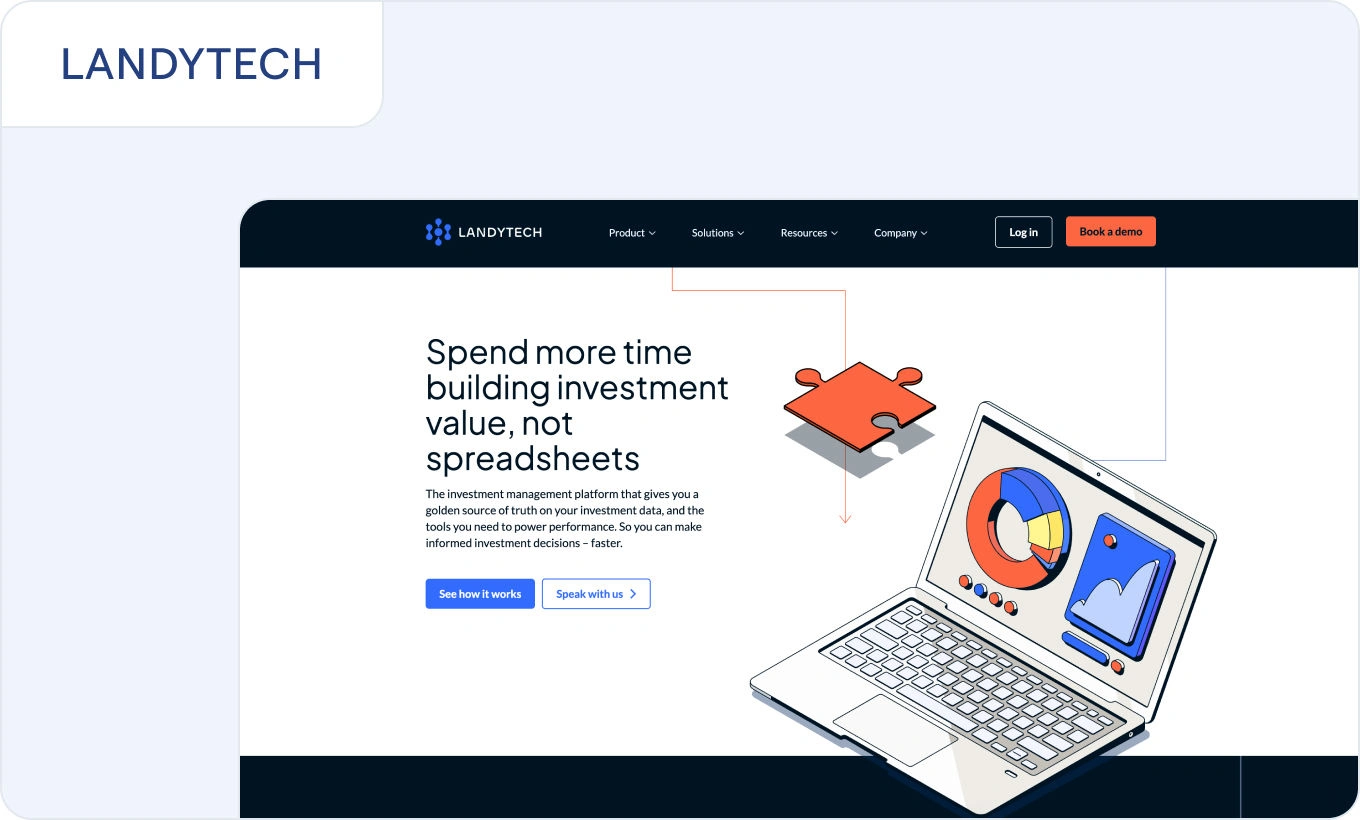
Year founded: 2018 | Pricing: $$$
Landytech's platform combines consolidated investment reporting software with operational tools, designed for asset owners, managers, and advisers requiring timely performance analytics and bookkeeping support.
- Best for: Offices with moderate to high complexity (10–50 entities, multiple custodians, and a mix of liquid and private assets) needing performance analytics and bookkeeping.
- Core Client Segment: Single-family offices, multi-family offices, wealth managers
- Regional Coverage: Latin America, Europe, Middle East & Africa, Asia Pacific
- Security & Privacy: GDPR, ISO27001, SOC2 Type II
Key Features & Capabilities:
- Data Aggregation: Automatic data feeds with 500+ custodians and 10,000+ open banking feeds
- Consolidated Reporting: Automated investment reports for stakeholders
- Performance Monitoring: Analytics for performance, risk, and exposure
- PDF Reporting: Scheduled and on-demand report generation
- Dashboards: Live portfolio dashboards with actionable insights
- Custodian Data Aggregation: Secure, automated feeds from banks and custodians
- Alternative Asset Support: AI-powered document processing for private investments
- Document Management: Centralized document storage with collaboration tools
- Investment Analytics: Enhanced analytics for complex portfolios
- Risk Analytics: Portfolio risk monitoring and alerts
- Ownership Structures: Visualize layered, multi-entity relationships with look-through across legal entities to clarify complex ownership maps.
- Cash Flow Forecasting: Forward-looking financial modeling
- Task Management: Workflow and task management tools
4. Microsoft Excel: Manual Consolidation for Simple Setups
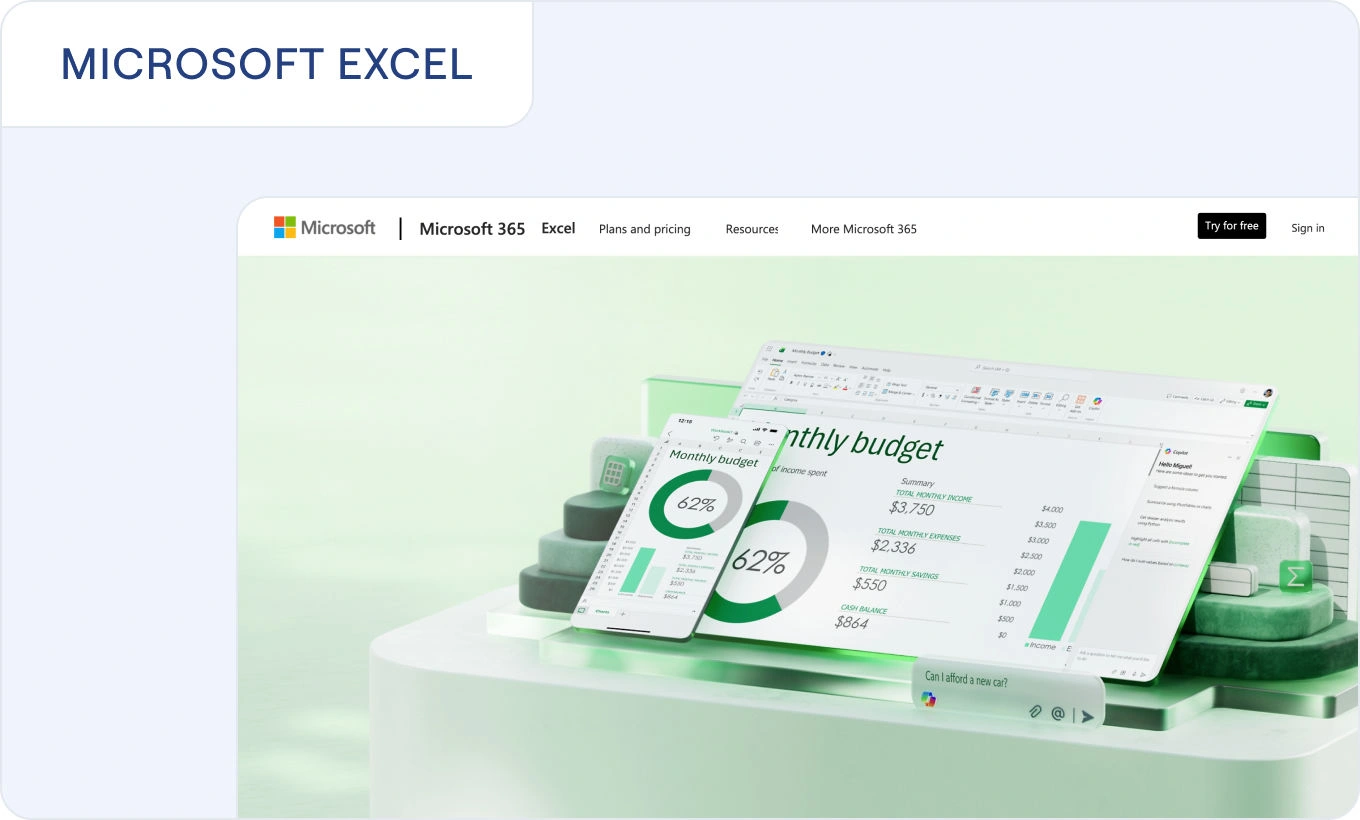
Year founded: 1985 | Pricing: $
Microsoft Excel is the common starting point for family offices and UHNWIs due to its low cost, flexibility, and familiarity. It allows teams to manually consolidate data and build custom reports across accounts and entities.
- Best for: Spreadsheet-led teams with low structural complexity (1–5 entities, few custodians) running manual reconciliations and ad-hoc Excel reports, now ready to standardize consolidated reporting.
- Core Client Segment: Single-family offices, multi family-offices, wealth managers
- Regional Coverage: North America, Latin America, Europe, Middle East & Africa, Asia Pacific
- Security: Depends on Microsoft 365 configuration, access controls, and file governance.
- Automation: Possible via Power Query/VBA, but requires internal discipline and increases model risk.
Key Capabilities:
- Consolidated Reporting: Manual consolidation through linked spreadsheets
- Performance Monitoring: Custom calculations and formulas
- PDF Reporting: Export to PDF for sharing
- Dashboards: Custom dashboard creation with charts and pivot tables
- Data Management: Flexible data organization and analysis
- Cash Flow Forecasting: Manual modeling and projections
- Open Architecture: Integration with other Microsoft 365 tools
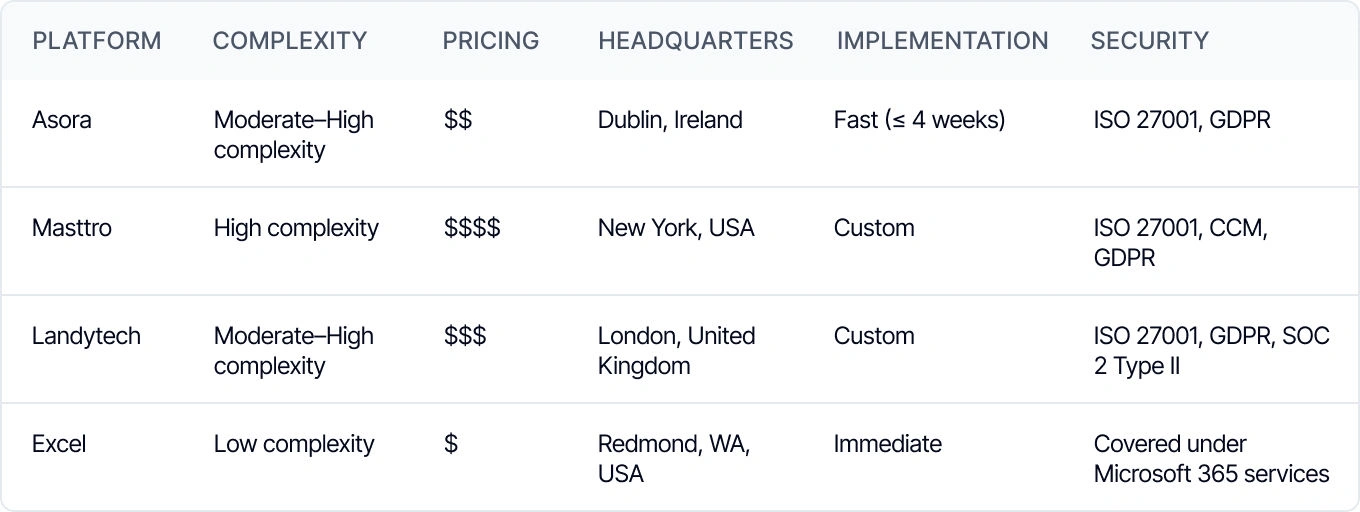
Consolidated Reporting Software Comparison Table
How to Pick the Best Consolidated Reporting Platform
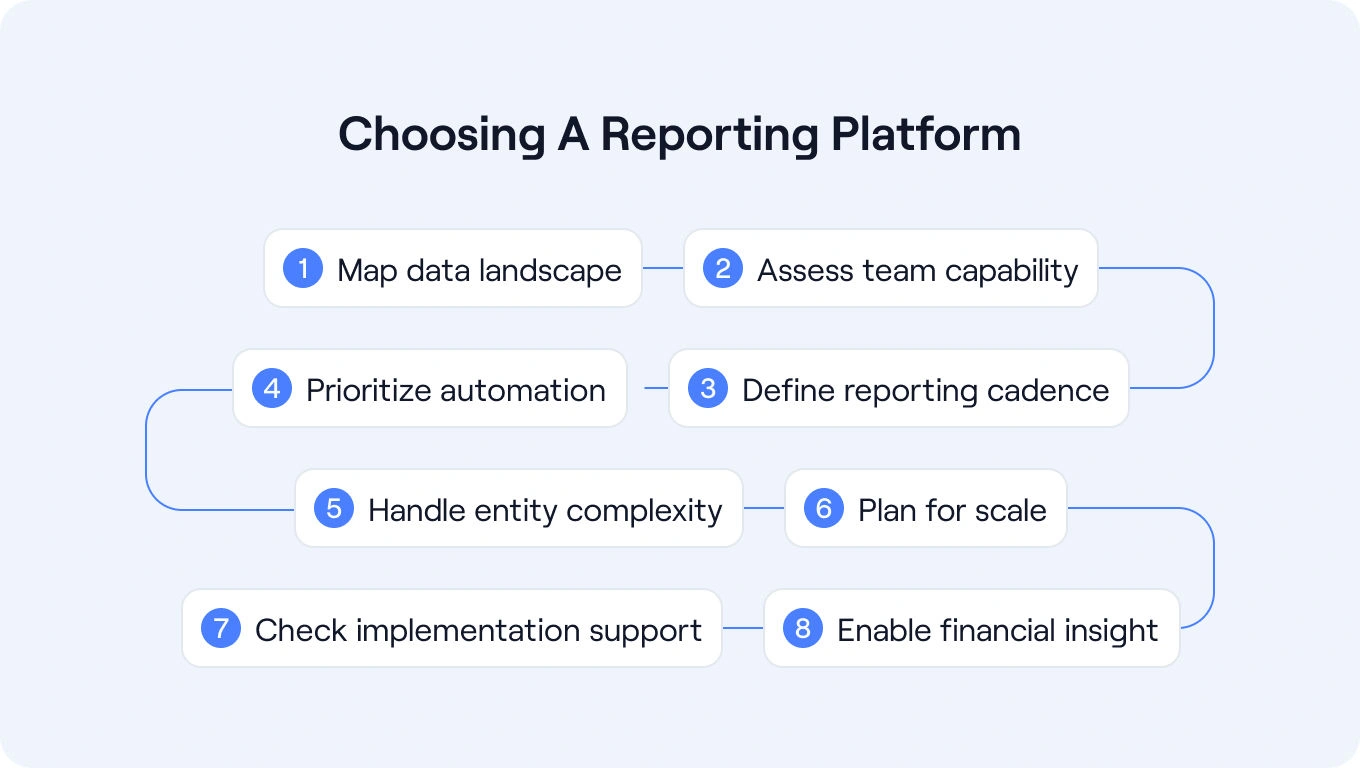
Every family office has unique needs. Choosing the right financial consolidation and reporting software requires understanding your specific operational model and reporting requirements. Here are key factors to consider:
1. Map Your Data Landscape
Start by identifying the volume and types of data you need to consolidate:
- How many bank accounts, custodians, and investment managers?
- What percentage of assets are in private investments versus liquid markets?
- How many legal entities and jurisdictions?
- What currencies do you operate in?
The financial consolidation reporting software you choose should handle your specific data integration requirements without extensive customization.
2. Assess Team Capabilities
Evaluate whether your team needs:
- Low-maintenance, highly automated solution (Asora, Masttro, Landytech)
- Configurable platform with internal IT support (Landytech, Masttro)
- Complete flexibility with manual control (All)
Some platforms offer extensive configurability but come with a steep learning curve. Others prioritize usability and speed of implementation.
3. Understand Reporting Cadence
Consider how frequently you report to stakeholders:
- Monthly or quarterly formal reports: Look for PDF reporting and scheduled distribution
- On-demand access: Prioritize timely dashboards and mobile access
- Board presentations: Focus on customizable report outputs
The best financial reporting consolidation software and financial reporting consolidation tools streamline your actual reporting processes rather than forcing you to adapt to the platform's limitations.
4. Prioritize Automation and Accuracy
Manual processes introduce risk and slow down reporting. Look for platforms that:
- Automate data aggregation from custodians and banks
- Handle currency conversions automatically
- Ensure consistency across financial statement reporting
- Reduce manual touchpoints that cause human error
Financial consolidation software streamlines these tasks, accelerating your financial close and improving accuracy.
5. Consider Multi-Entity Complexity
If your office spans multiple jurisdictions or involves complex global consolidations, verify that the solution can handle:
- Multi-currency environments
- Different accounting principles by jurisdiction
- Ownership structure mapping
6. Evaluate Scalability
Your reporting needs will evolve as:
- Investment strategies change
- New entities are created
- Next generations take leadership roles
- Regulatory requirements expand
The consolidated reporting platform should scale with your structure and support emerging business processes without requiring complete replacement.
7. Review Implementation and Support
A powerful solution is only effective if it can be implemented successfully. Consider:
- Time and resources required to go live
- Data migration complexity
- Vendor support quality and responsiveness
- Documentation and training availability
- Ongoing customer service
8. Look Beyond Reporting to Financial Intelligence
The right platform doesn't just generate consolidated financial statements—it helps you interpret and act on financial data. Look for solutions that enable:
- Better financial analysis
- Timely insights
- Strategic planning support
- Risk management capabilities
Find the Right Financial Consolidation Software
The best fit depends on your tier of complexity (entities, accounts, private deals, integrations)—not just size:
- Asora — Tier-based pricing: Ideal for Tier 1–2 offices (simple to moderate complexity) that want intuitive, fast-to-implement consolidated reporting. Balanced automation, usability, and comprehensive features without enterprise bloat.
- Masttro — Enterprise tier: Suited to Tier 3 environments (complex, multi-entity, document-heavy, global) requiring high security and extensive custodian connectivity.
- Landytech — Operations + analytics tier: Strong for Tier 2–3 teams that need consolidated reporting, plus bookkeeping integration and enhanced performance analytics.
- Microsoft Excel — Manual tier (temporary): Works for pre-Tier 1 setups willing to manage consolidation manually; plan to graduate as complexity grows.
Bottom line: The right consolidated reporting platform turns reporting from a chore into a strategic asset, improving decision-making, governance, and long-term wealth preservation.
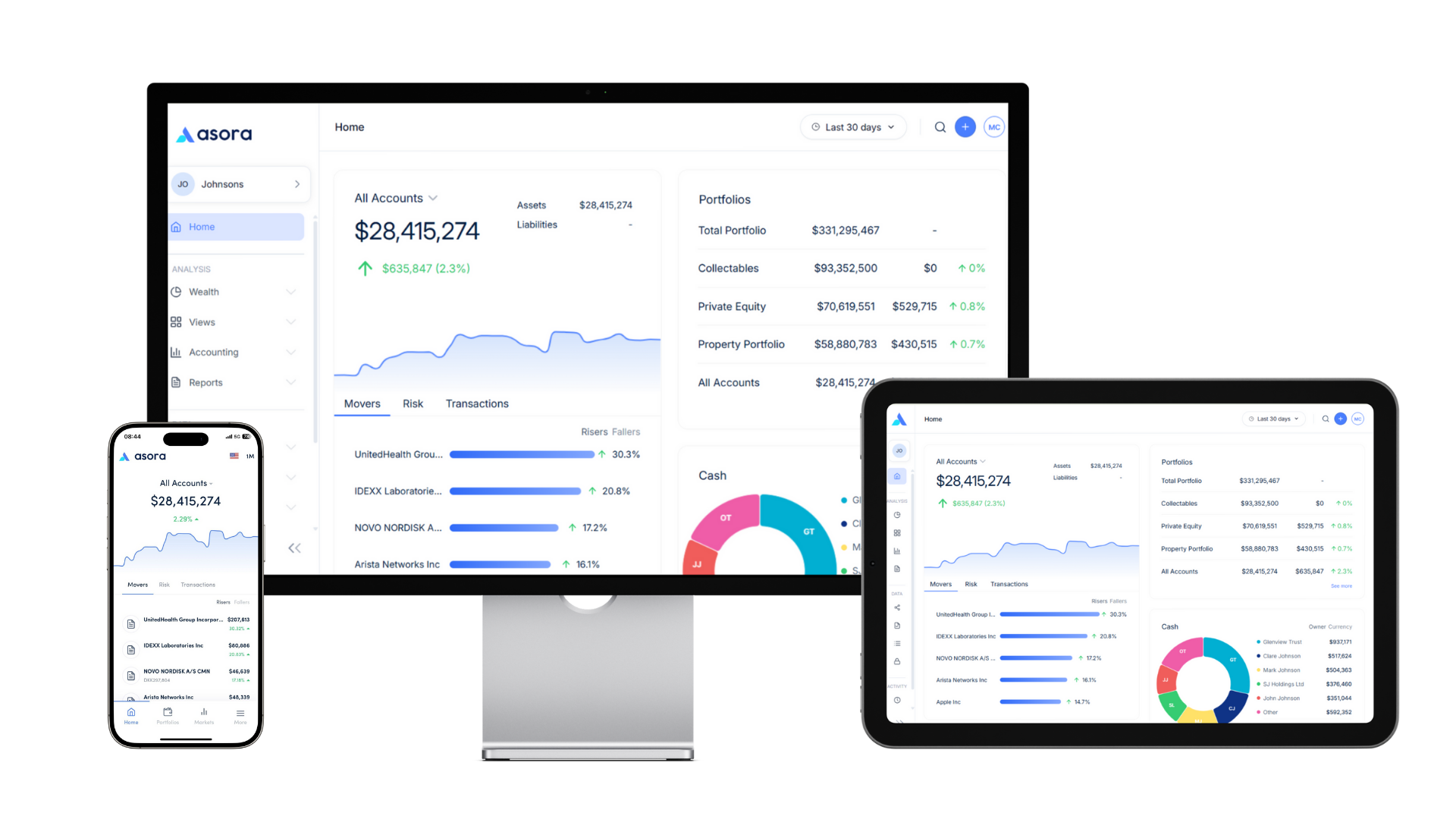
Schedule a demo with Asora to learn how we help family offices consolidate wealth data, automate reporting, and gain real-time portfolio visibility.
FAQs: Consolidated Reporting Software
Q. What is consolidated financial reporting software?
Consolidated financial reporting software centralizes financial data from multiple entities into one platform for analysis and financial reporting. It automates data integration, streamlines the financial consolidation process, and produces consolidated views and stakeholder reports. Leading tools also support currency translations so finance teams can deliver accurate reporting at scale.
Q. Which platforms support alternative investments?
Asora, Landytech, and Masttro support private equity, real estate, venture capital, and other alternatives. Look for integration capabilities across custodians and document sources, and controls for account reconciliation. These features make preparing consolidated financial views across illiquid assets practical.
Q. How do I choose the right financial consolidation and reporting software?
Match the tool to your consolidation capabilities and operating model. Consider reporting cadence, the number of entities and jurisdictions, currency exchange rates, and required connections. Prioritize software solutions that automate feeds, handle intercompany transactions, and support internal reporting. Asora fits teams seeking fast implementation and usability. Masttro suits complex environments. Landytech aligns well with bookkeeping integration.
Q. What features should I look for in consolidation and reporting software?
Look for automated data integration; multi-entity, multi-currency consolidation; performance metrics (TWR, IRR, MOIC); configurable reports and dashboards; document vaults; and reconciliation tools, plus clear limits on data volume and migration pathways. Require disclosure of the methodology (fees, timing, valuation source, benchmark policy) to ensure results are comparable and avoid misleading performance claims.

.png)
.png)
.jpg)
.png)