

Author

.jpg)

Table of contents
"What used to take hours or days is now done in minutes"

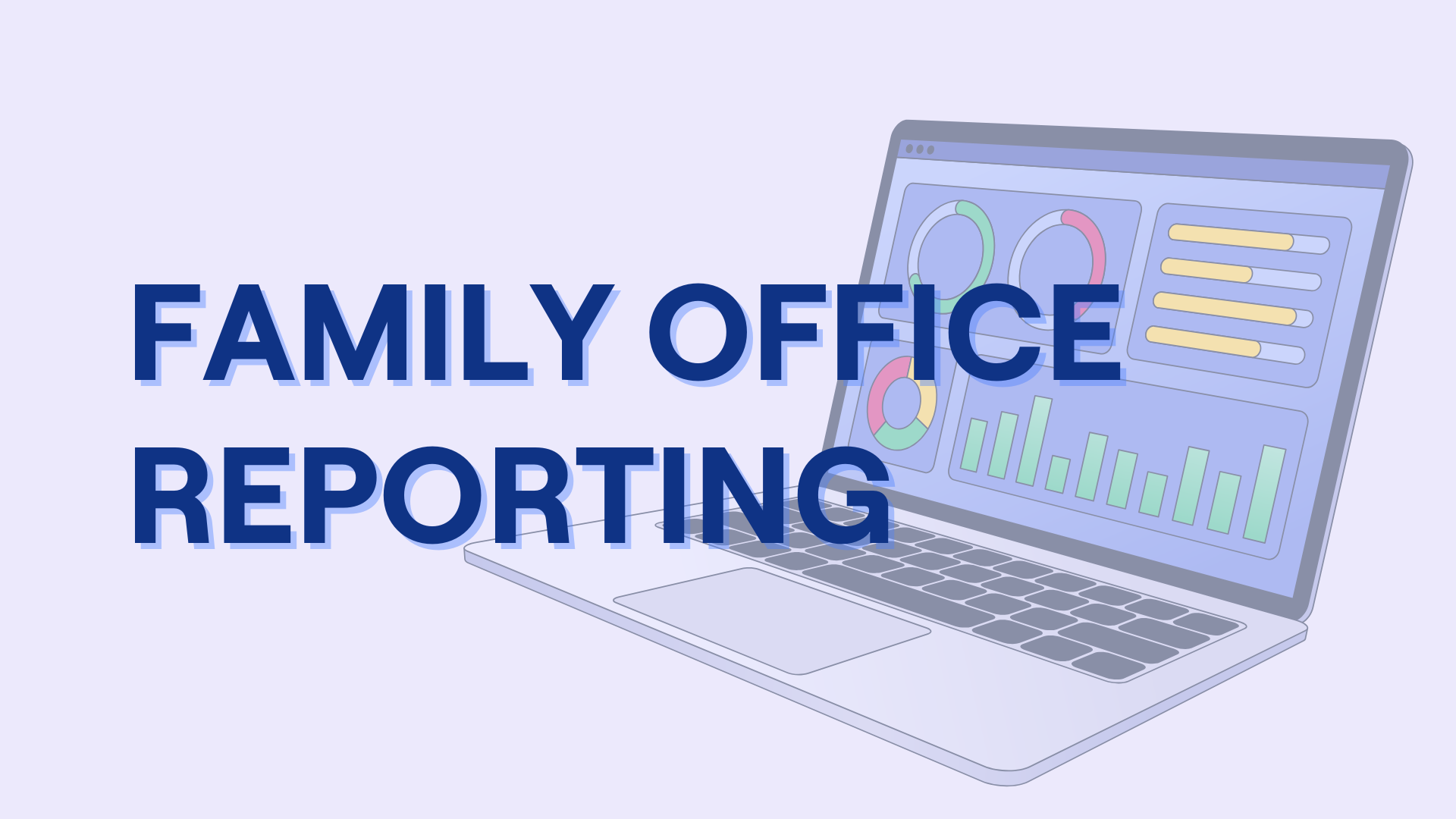
Family offices are adopting digital tools to manage increasingly complex portfolios that span multiple banks, entities, and private assets. Technology now plays a crucial role in how a family office operates, manages risk, and delivers value to wealth holders. The priority is clear: unify investment data, reduce manual work, and build digital infrastructure so decision-making is faster, reviews are cleaner, and reporting is consistent for different stakeholders across generations. This shift also supports the digitalization of family businesses, where operating companies and the investment side share a common data baseline.
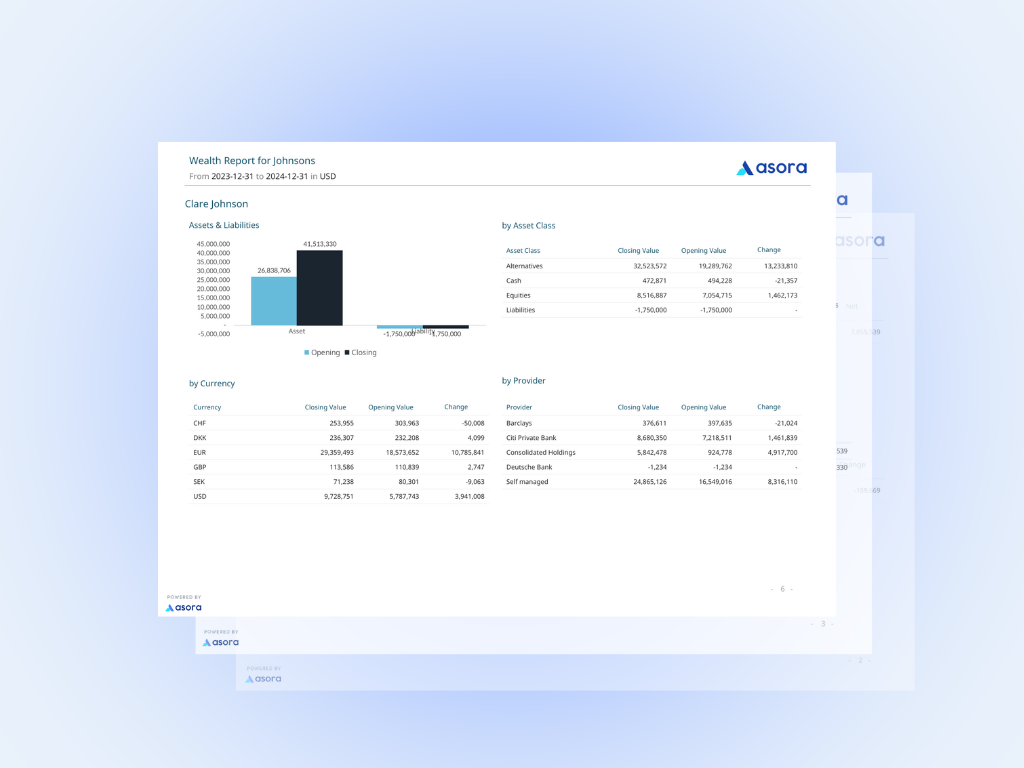
Rising wealth and the emergence of more entities have exposed the limits of manual processes. Files fragment, versions diverge, and evidence hides in inboxes. Manual data aggregation becomes a monthly scramble, while key-person risk grows as spreadsheets multiply. The result is slower reporting and weaker confidence in the numbers.A digital foundation fixes the basics. Consolidated reporting across multiple asset classes delivers a single view by entity and by owner. Data feeds keep bankable assets up to date on a predictable cadence. Source documents link to each holding, so reviews center on facts rather than file hunting. With these elements in place, leadership shifts to portfolio management, risk management, and the family’s investment strategy rather than maintenance. It also lays the groundwork for repeatable digital reporting for family offices on a periodic basis.This article outlines a practical blueprint for replacing spreadsheets, the operational technology required to support investment management, the security practices that sustain trust, and simple methods for measuring returns. Where applicable, short notes indicate where software like Asora can store the record, link evidence, and support team workflows while approvals and reconciliation remain in the external process.
Family offices safeguard sensitive financial information for families across single family and multi family offices. Protection cannot be an afterthought. Access needs to be gated with multi-factor authentication for every user, including those using mobile devices. Documents should reside on a controlled platform rather than in email threads, ensuring the same file is referenced in every review. Clear permissioning for who can view, edit, and export data reduces operational risk, and regular training on phishing and device hygiene maintains high awareness.Freshness policies matter as much as passwords. A predictable cadence for bankable data helps avoid ad hoc pulls that bypass controls and enables teams to align reporting with policy. Asora supports this posture by implementing MFA, user permissioning, and keeping source documents linked to the relevant assets, thereby reducing file sprawl and enabling accurate reporting.
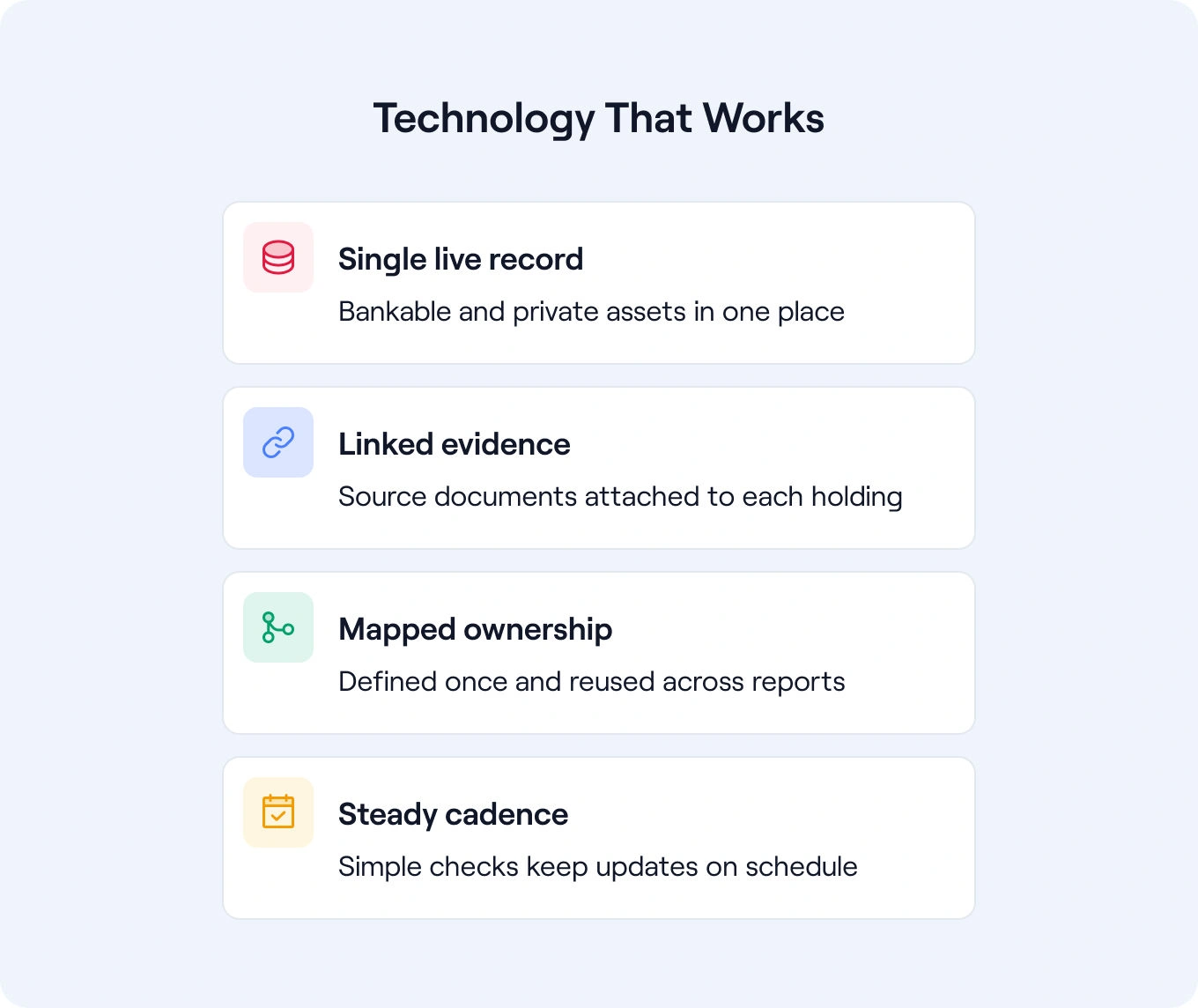
Digital platforms deliver value by removing friction from investment and portfolio management without adding complexity. The focus is on a single source of truth, regularly updated data, and evidence that sits with the numbers under review. These same practices underpin family office digital reporting across entity, consolidated, and owner views.
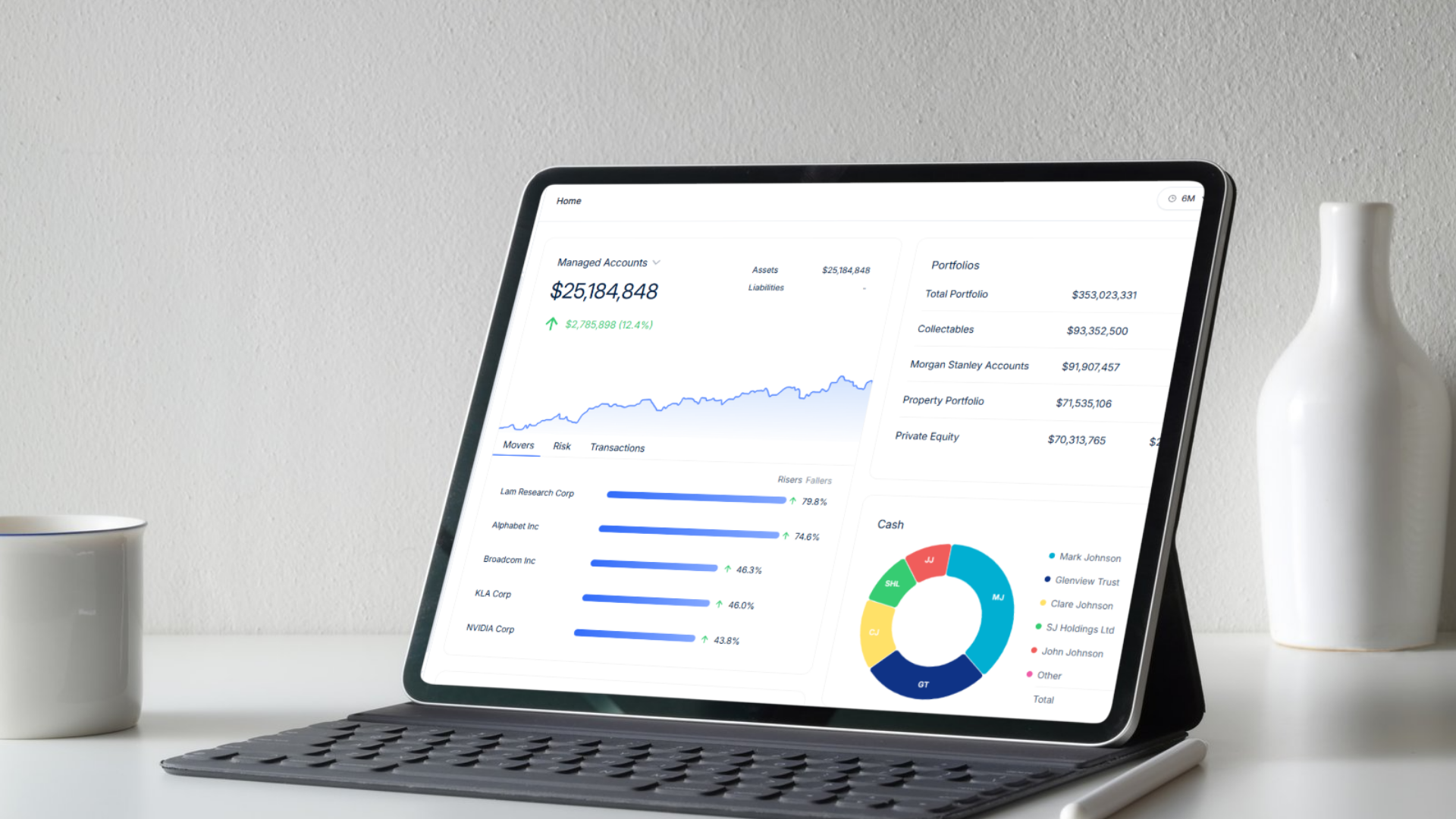
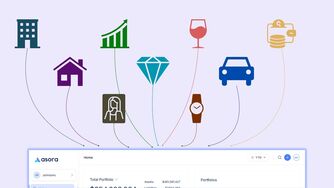
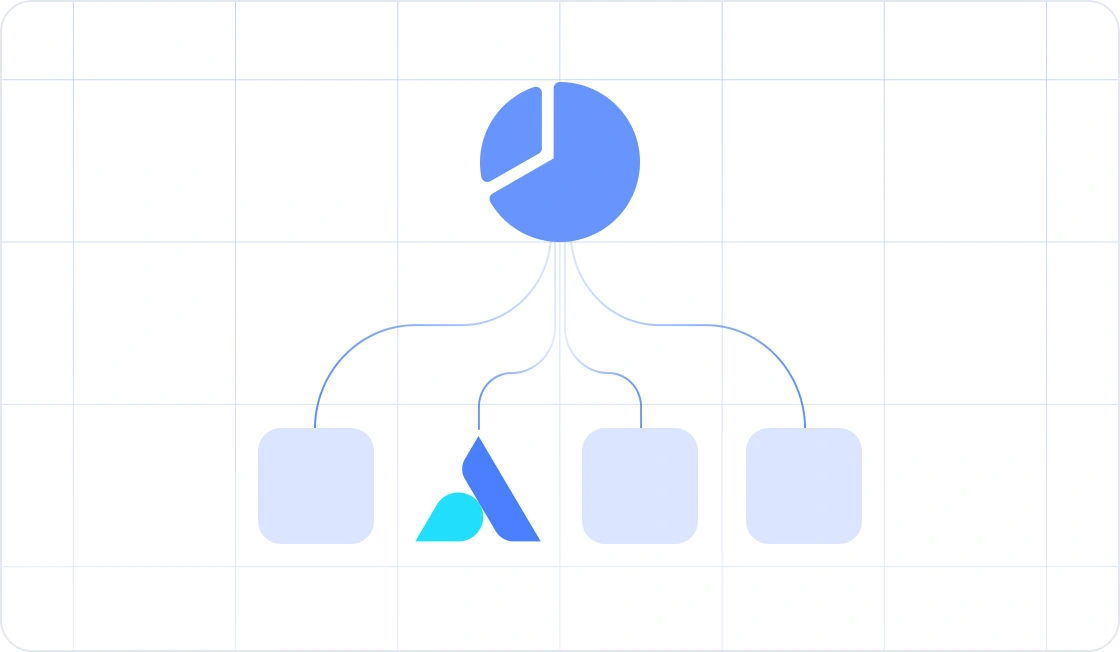
Consolidating bankable and private assets into a single platform eliminates the need for manual data aggregation across accounts and custodians. Positions, identifiers, valuation basis, currency, and ownership are all in one place, so consolidated reporting remains stable as the perimeter expands.
Where Asora helps: Data Aggregation pulls in timely bank/custodian data, while the Private Assets register tracks private equity, venture capital, hedge funds, real estate, and other alternative assets.
Capital accounts, appraisals, manager letters, fee files, and FX sources linked to the assets transform reviews into verification rather than requiring manual searches. With capital accounts, appraisals, manager letters, fee files, and FX sources linked to each asset, reviews become verification, not scavenger hunts. Operational efficiency improves and key-person risk decreases because reviewers work from a single shared workspace with the same linked source documents.
Where Asora helps: Documents links supporting files to each position; reviewers open evidence from the holding itself.
Look-through ownership is defined once and reused across reports, rather than being rebuilt per workbook. Complex structures become legible to family members and advisors, and discussions about exposures and pacing are grounded in the same view.
Where Asora helps: Wealth Map shows the ownership structure that reporting uses alongside the positions list. For groups with operating businesses, this clarity also supports the digitalization of family businesses by enabling shared entity definitions.
Reconciliations help prompt teams to address missing statements, obvious cash-flow gaps, or stale FX, helping them maintain a predictable COB rhythm without over-engineering the stack. Inputs and outputs remain traceable, so reviews focus on the decisions made.
Once the base is clean, choices improve. COB updates support timely reports without constant refresh. Liquidity planning becomes clearer when accounts, expected distributions, maturities, and near-term outflows are displayed in a single view. Commitment pacing for private equity and venture capital aligns expected calls and distributions with available cash so the family’s investment strategy does not over- or under-allocate. FX exposure snapshots quantify currency risk, while look-through concentration reveals true sector or issuer exposure across vehicles. Scenario notes help plan exits, refinancings, or impact-investing moves, with inputs stored alongside the positions they affect. These practices help many family offices make informed financial decisions with less noise.Asora stores the positions list and links evidence to each position, so the inputs for liquidity, pacing, FX, and concentration views sit in one place.
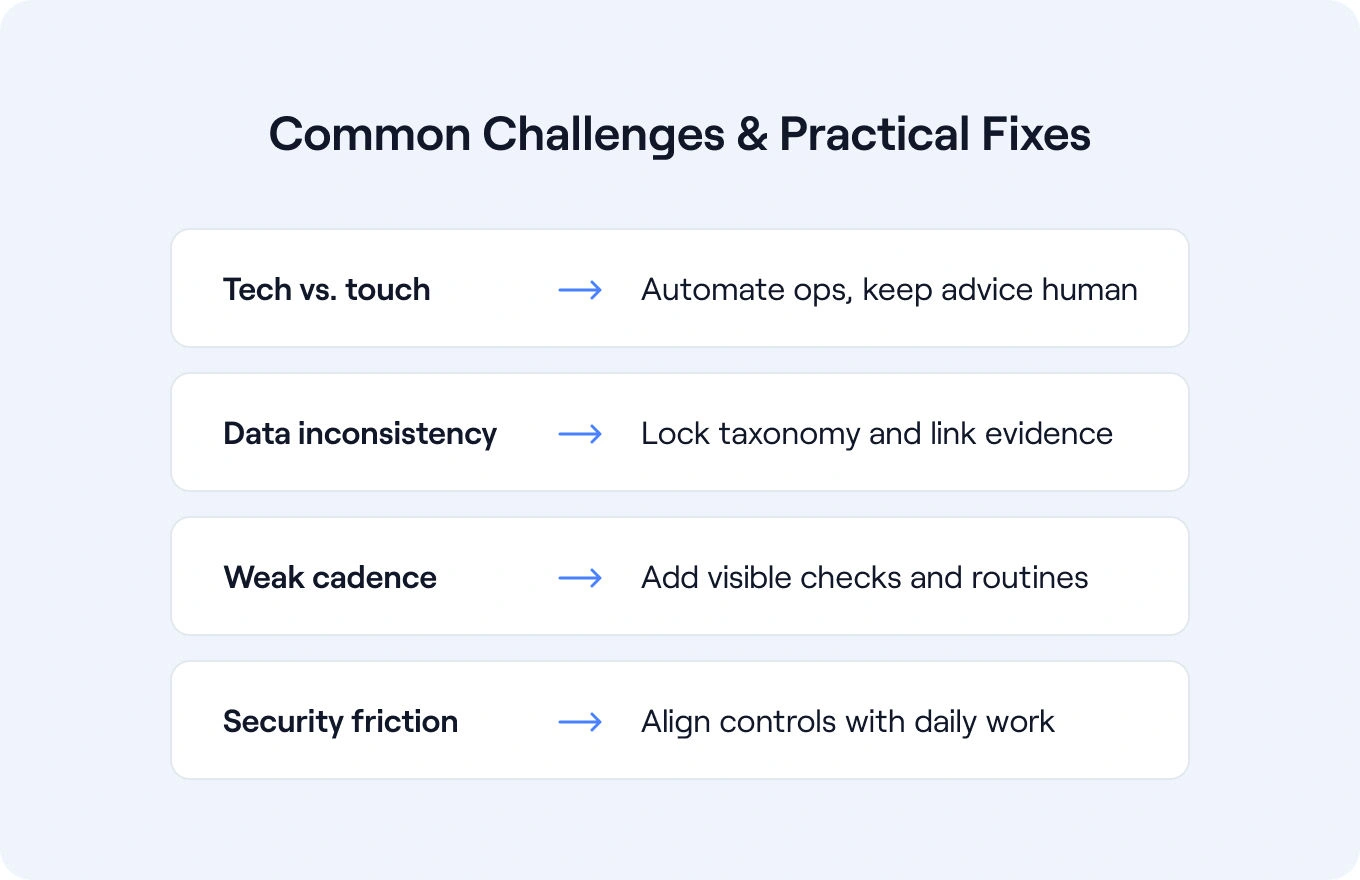
Digital transformation touches people and processes as much as technology. Family offices succeed when culture and cadence are explicit.
Relationships remain central. Digital tools should automate tasks such as data collection, file linking, and status reminders, while advisors interpret the results for clients. Clear communication about where the live record sits helps different stakeholders remain aligned.
Decide the taxonomy for asset class, strategy, region, liquidity, and wrappers. Establish file naming and folder rules. Link each document to its holding. Add a daily reconciliation check for missing COB feeds. Quality rises when the routine is visible.
Write controls that match how the team works. MFA and limited file sharing reduce risk. Keep a concise register of policies and update language when controls evolve. The goal is consistency, not slogans. Asora is ISO 27001 certified and GDPR compliant.
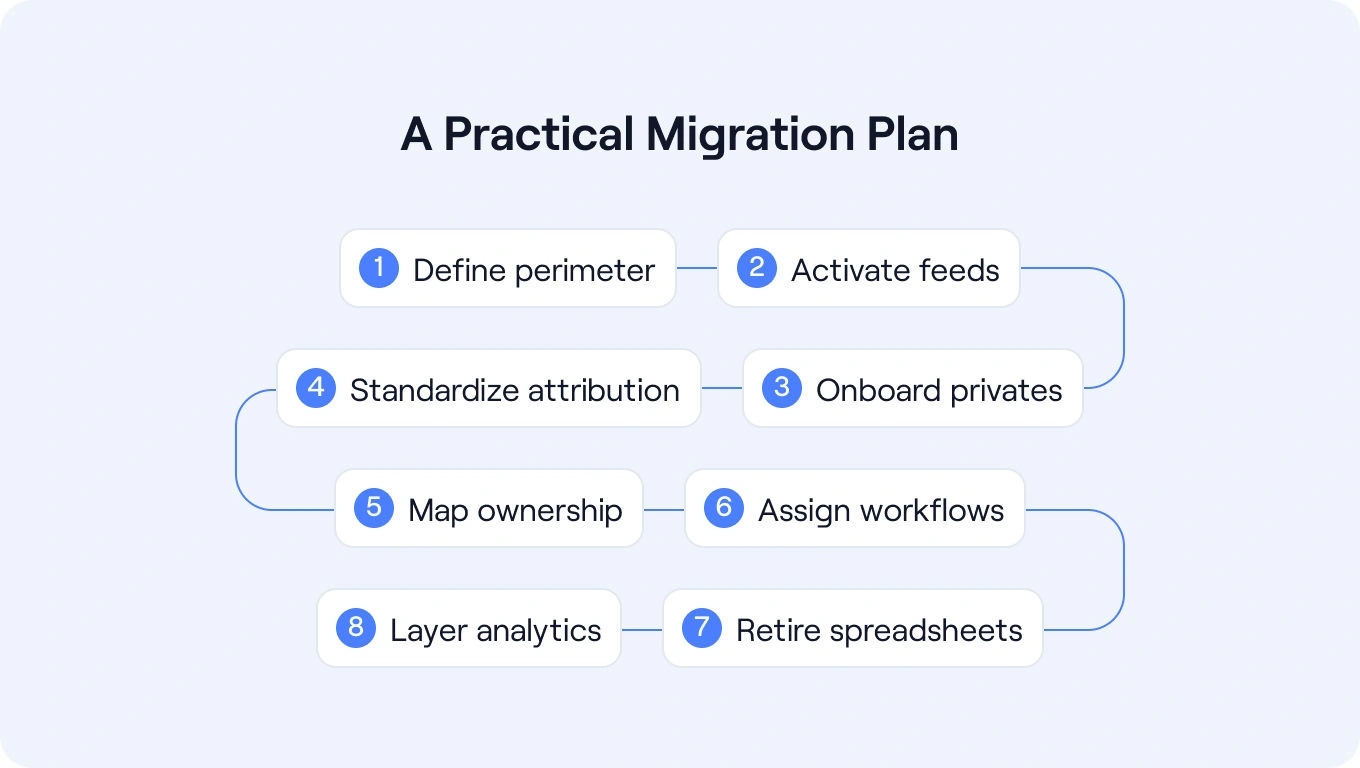
A practical plan builds confidence quickly and scales without drama.Start by defining a small perimeter of entities and the main bankable accounts. Turn on bank and custodian feeds and verify them against the statements. Bring private assets into the same record by entering capital accounts and linking appraisals and memos. Standardize change attribution to separate flows, valuation changes, FX, and other drivers. Map ownership once across trusts, SPVs, and holdcos, so look-through reporting reuses the same chart. Use workflow tasking to assign responsibilities and deadlines. Retire legacy tabs as software outputs meet the same need. Add sophisticated analytics only after methods and inputs are stable.This is modern business practice for the family office market. It reduces manual processes, builds operational efficiency, and supports wealth preservation across future generations during the excellent wealth transfer.
Good reporting is transparent, traceable, and easy to review for single family offices and multi family offices alike. One source of truth powers entity, consolidated, and owner views. The attribution view explains movement, not just the level, and brief notes link to the supporting files for each driver. Labels follow a common taxonomy, so filters and rollups behave consistently. With this structure, teams can remain relevant to clients without overspending on tools that do not fit.Where Asora helps: the platform aggregates and stores financial data, and links documents, ensuring consolidated reporting remains consistent. Each position shows which source files are on file and which are missing, helping teams close gaps and report accurately to family members and external financial institutions.
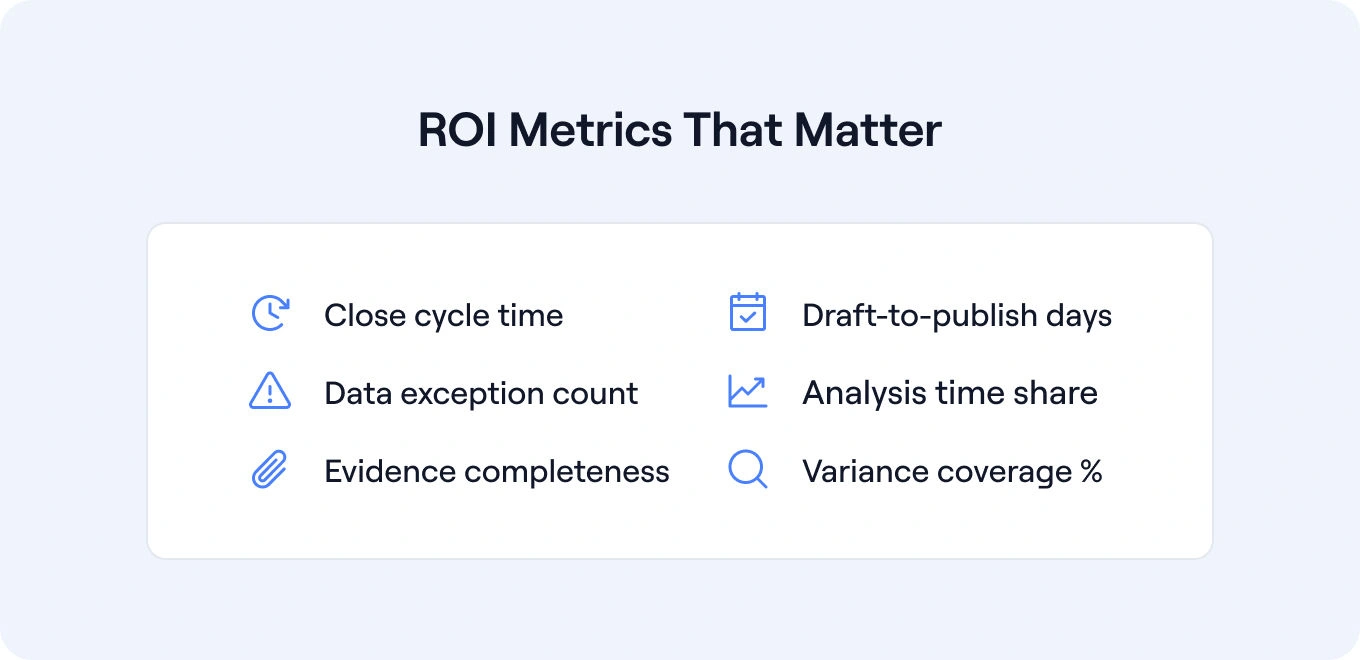
The return should be visible in the rhythm of the work, not just in slide decks. A small set of measures shows whether digital transformation is reducing maintenance and improving decision quality.Start with cycle time. Measure days from period end to the first draft of the report, then from the first draft to distribution to stakeholders. Shorter intervals signal a cleaner record, fewer handoffs, and faster meetings. Workflows can track task start and finish to keep this honest.Count missing statements, unmatched balances, and stale FX each cycle. A steady cadence and linked evidence should help reduce this number; spikes indicate data or process drift that requires attention.Track the time spent. Compare hours spent fixing data to hours spent in analysis. The target is a rising share of analysis. When the register is stable and documents are in order, preparers spend less time reconciling and more time preparing insightful reports.Monitor evidence completeness.
Calculate the share of positions with the required files attached (statements, capital accounts, appraisals, fee schedules, FX sources). High completeness predicts smoother reviews and fewer late follow-ups.Assess variance coverage. For each attribution view, record the percentage of change explained by concise notes and linked files across flows, valuation change, FX, and other drivers. Higher coverage leads to clearer decisions and fewer reruns.Taken together, these metrics indicate whether the digital infrastructure is shifting effort from maintenance to decision-making, tightening controls, and facilitating the optimization of portfolio management without introducing unnecessary complexity.
Where Asora helps: a central platform and document vault make evidence completeness measurable; Data Aggregation brings everything to a central platform; data cleansing helps manage reconciliation, with COB feeds; Workflows provide due dates and help people assign tasks and manage deals in the pipeline.
Most rework stems from small process slips that erode confidence. Mix-ups between book and fair value in the same column leave readers guessing; clear labels and an explicit basis for each line prevent confusion. Lineage also suffers when edits wander across versions, so the live register should remain the home for changes, with the source file linked beside the entry.
Comparability often breaks down in foreign exchange. Periods anchored to different providers or timestamps produce noisy results; a single FX source saved with date and method keeps periods aligned. Risk can also hide in side files. Private equity, venture capital, hedge funds, real estate, and other alternative investments should be included in the same record as bankable assets, with capital accounts and appraisals attached to each holding.Levels without a movement bridge invite guesswork. A short bridge that separates flows, valuation change, FX, and other drivers creates a shared narrative and faster reviews. Key person risk increases when logic resides in one analyst’s spreadsheet; shared workflows and a single source of truth disseminate knowledge and make handoffs routine. Scope clarity matters too. A fixed perimeter, defined eliminations, and a clear cut-off at the start of each cycle keep comparisons clean from one period to the next.
Digital transformation in family offices is not a slogan. It is a focused shift to a single position list, a shared taxonomy, timely data aggregation, and evidence linked to each holding. Those basics unlock informed decisions in investment management and risk management, support families with diverse assets, and prepare offices to stay ahead during the generational wealth transfer. The difference is not more tools. It is adopting the right digital platforms and habits that replace manual data aggregation outright.
Where Asora helps: Asora provides the operational technology needed to store the live record, link source files, map ownership, and keep preparation and review visible. The platform supports data aggregation for bankable assets on a COB cadence and includes modules for Private Assets, Documents, Workflows, and Wealth Map. Approvals and reconciliation stay in the external process.
Digital transformation in family offices is a practical shift, not a branding exercise. More entities, more private assets, and more data demand a steadier operating model than spreadsheets can sustain. The path is clear: establish a single holdings register, set a regular cadence for bankable assets, bring private assets into the same record, and keep evidence where numbers live. Workflow tasking makes preparation and review visible. Legacy tabs retire as coverage expands. Sophisticated analytics follow once methods and inputs are stable.This approach keeps the office relevant to the next generation, strengthens portfolio and risk discussions, and supports wealth preservation across future periods. It replaces maintenance with momentum and turns reporting into a routine that principals and committees can trust.
Request a demo to see how Asora supports this transformation with a single live register, linked evidence, and clear workflow support, enabling teams to improve operational efficiency, optimize portfolio management, and make informed financial decisions that sustain family wealth.
Lorem ipsum dolor sit amet, consectetur adipiscing elit. Suspendisse varius enim in eros elementum tristique. Duis cursus, mi quis viverra ornare, eros dolor interdum nulla, ut commodo diam libero vitae erat. Aenean faucibus nibh et justo cursus id rutrum lorem imperdiet. Nunc ut sem vitae risus tristique posuere.
Reporting improves when the live record is precise and repeatable. COB updates stabilize baselines; evidence lives beside the numbers. Teams spend less time locating files and more time on analysis. Asora supports this by aggregating and storing data, linking documents at the holding level, and providing workflow tasking to make handoffs visible.
Centralizing sensitive financial information in a controlled platform reduces email exposure and clarifies access. Multi-factor authentication (MFA) protects sign-in. Document linking keeps source files with the positions they support, improving traceability. Any references to frameworks such as ISO 27001 or GDPR should reflect controls the firm actually operates and has verified. Asora supports MFA and structured document storage; however, it does not provide audit logs or per-document permissions. Governance, approvals, and reconciliation are part of the office’s external process.




.png)
.jpg)
.png)
.png)
.jpg)
.png)

.png)

.png)
.png)
.jpg)

.jpg)
.jpg)
.png)

.jpg)
.jpg)


.png)
.jpg)
.jpg)
.jpg)
.jpg)
.jpg)
.jpg)

.png)
.webp)


.png)
.png)
.png)
.png)
.png)
.png)
.jpg)
.jpg)
.png)
.png)
.png)
.png)
.jpg)
.png)
.png)
.png)
.png)
.png)
.png)
.png)
.png)
.png)
.jpg)
.png)
.png)
.png)
.png)

.webp)