
.png)
TL;DR
Private equity reporting software helps investors and family offices manage fund reporting across commitments, cash flows, and portfolio data. For some teams, this overlaps with internal private markets reporting tools used to support reporting and communication with principals, investment committees, or other stakeholders. While these tools improve data collection, organization, and investor reporting workflows, accuracy in the private equity industry still depends on fund managers, disciplined investment accounting, and consistent internal review.
What “Accurate” PE Reporting Actually Means
Accuracy in private equity reporting is often misunderstood. Unlike public markets, private equity data is not continuous, standardized, or real-time. Most updates follow a structured, but inherently delayed cadence. This challenge is increasingly discussed across the industry, particularly as family offices move away from fragmented reporting approaches. Many family offices are also adopting wealth tech platforms that centralise fragmented investment records and documents into a more structured reporting environment.
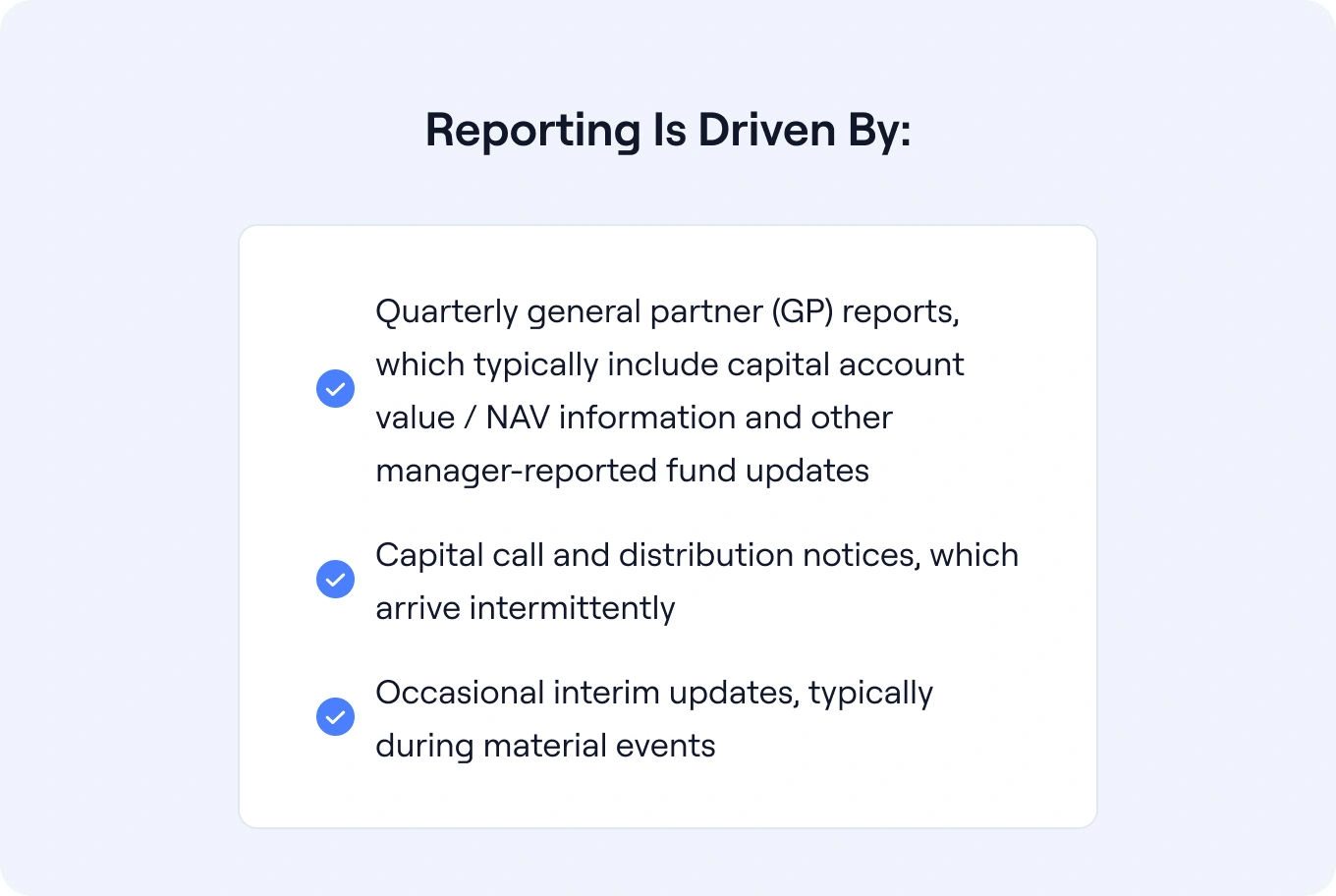
In practice, reporting is driven by:
- Quarterly general partner (GP) reports, which typically include capital account value / NAV information and other manager-reported fund updates
- Capital call and distribution notices, which arrive intermittently
- Occasional interim updates, typically during material events
This means “accurate” reporting is less about speed and more about consistency and traceability. This shift is also reflected in how technology is shaping reporting workflows across family offices.
At a practical level, accuracy depends on several operational inputs:
- Clean and complete source data
- Consistent entity mapping across structures
- Correct cashflow dates for IRR and DPI calculations
- Valuation effective dates aligned to GP reporting
- Clear allocation logic across entities and vehicles
- Disciplined document handling and linkage
Tools can support these processes, but they do not replace them. This also shapes how investment strategy decisions are supported, as consistent reporting depends on how portfolio data is structured and reviewed across funds. Even the most advanced private equity reporting software, or broader private equity reporting tools, still relies on manager-provided data and internal validation to make informed decisions.
Recent EY research reinforces this point. In EY’s Private Equity Exit Readiness Study, almost 72% of firms identified weak data and KPI reporting as the most significant finance issue at exit. While the context is exit readiness, the implication is consistent across the lifecycle: reporting accuracy depends on disciplined data handling. In practice, this means clean inputs, consistent entity mapping, correct cashflow dates, and clear valuation effective dates; areas where software can support the process, but not replace internal review
Top 10 Private Equity Reporting Software in 2026
The tools considered in this list aren’t all direct competitors. They address different parts of the private equity reporting stack, from data capture to analytics to fund operations. They have been segmented into different categories to enable full and accurate consideration:
Private markets portfolio monitoring and analytics
This category focuses on standardizing private markets data and enabling portfolio-level reporting across multiple funds and managers. These platforms are typically used by institutional allocators, investment operations teams, and reporting or portfolio management teams that need structured data, repeatable reporting, and, in some cases, benchmarking or valuation workflows.
S&P Global iLEVEL
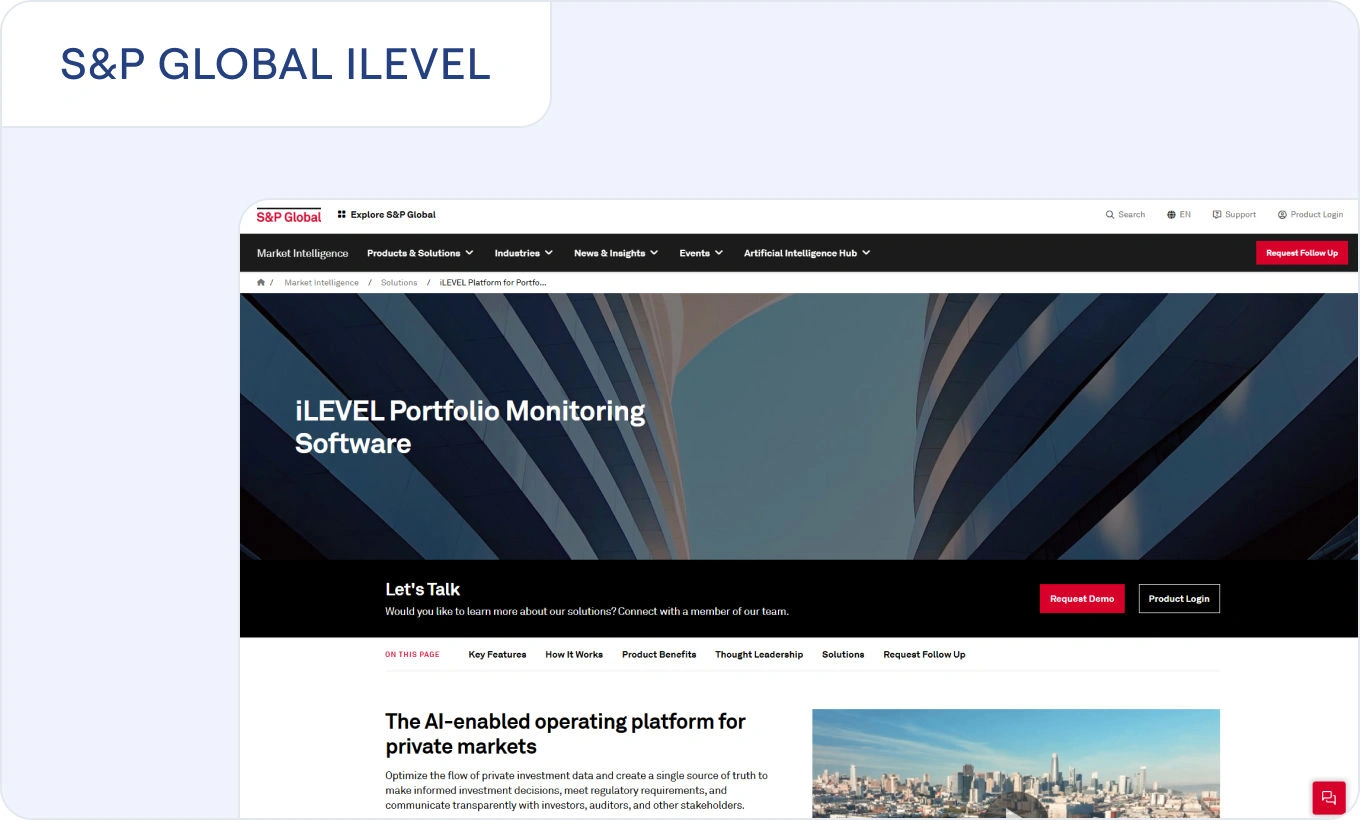
S&P Global iLEVEL is a private markets data management and portfolio monitoring platform used by GPs and LPs to streamline data collection, analytics, valuation, and reporting.
Best for: Institutional allocators requiring structured portfolio monitoring and valuation workflows
Strengths:
- Standardized private markets data capture
- Portfolio monitoring and reporting workflows
- Valuation support capabilities
Integrations to validate: Fund administrators, GP portals, APIs, internal data warehouses
Implementation effort: High, driven by data standardization and historical data onboarding
S&P Global iLEVEL supports organizations seeking structured private markets data management and reporting workflows.
Chronograph
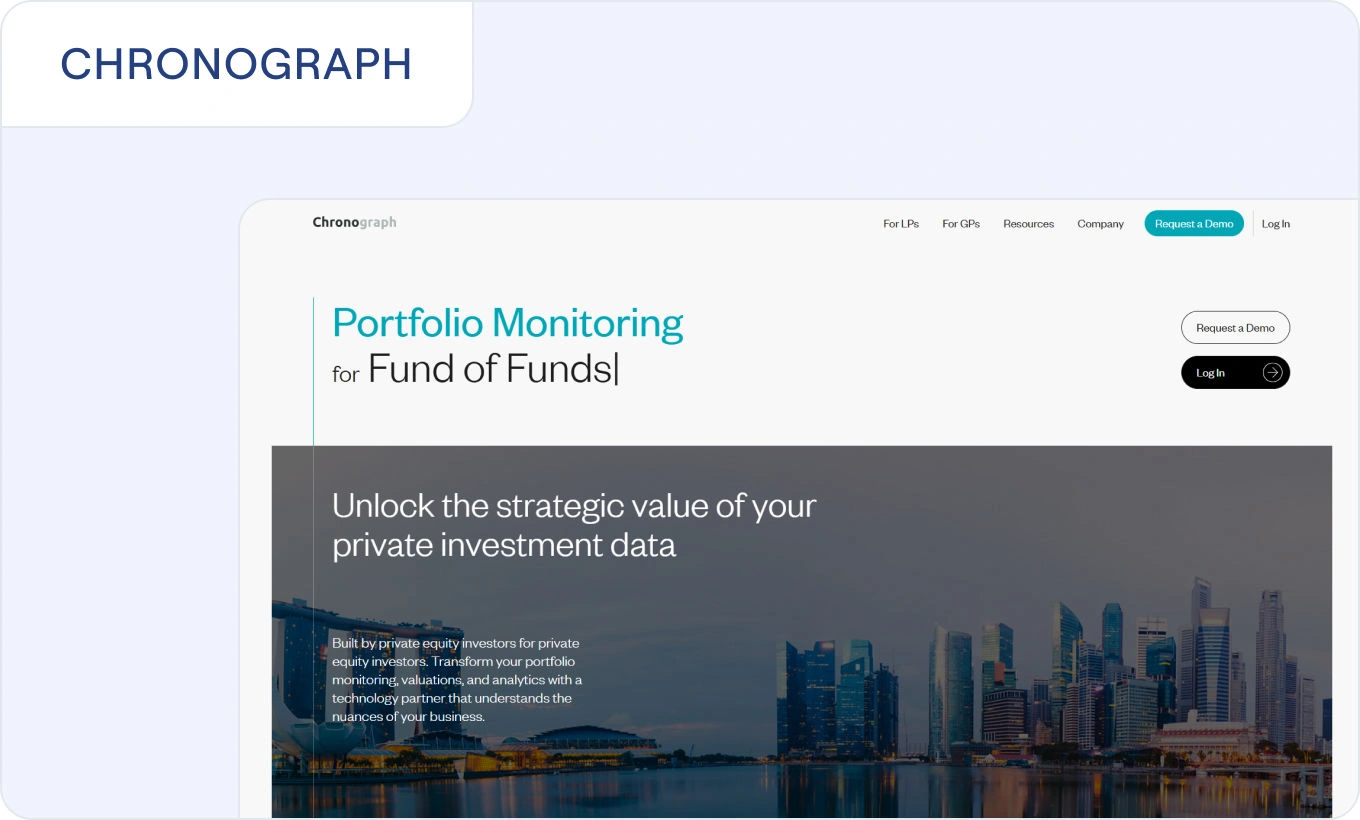
Chronograph provides a data and analytics platform for private capital investors, with a focus on consolidating fund data and supporting internal reporting processes.
Best for: Private capital investors needing data management and repeatable reporting
Strengths:
- Portfolio monitoring across private markets
- Data management and reporting workflows
- Structured data capture across funds
Integrations to validate: GP data sources, internal systems, export pipelines
Implementation effort: High, depends on data model alignment and fund volume
Chronograph supports investors seeking consistent private markets reporting with structured data workflows.
CEPRES
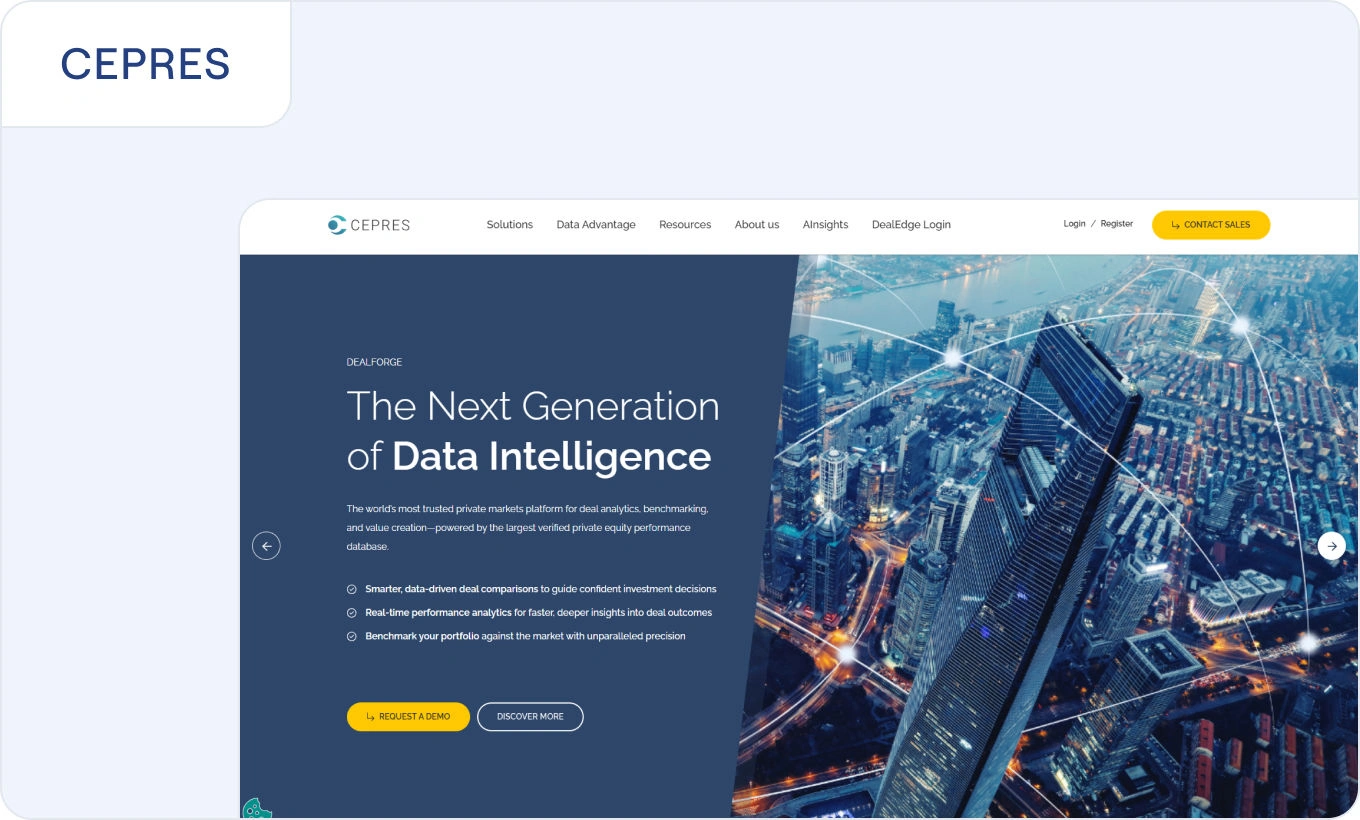
CEPRES offers a private markets investment platform combining portfolio monitoring with access to market data and benchmarking insights.
Best for: Investors prioritizing benchmarking and market intelligence
Strengths:
- Private markets data and analytics
- Benchmarking capabilities
- Portfolio monitoring
Integrations to validate: Data ingestion sources, benchmarking datasets, exports
Implementation effort: Medium to high, depending on dataset integration
CEPRES supports investors seeking benchmarking and analytics alongside portfolio monitoring.
BlackRock eFront / Aladdin
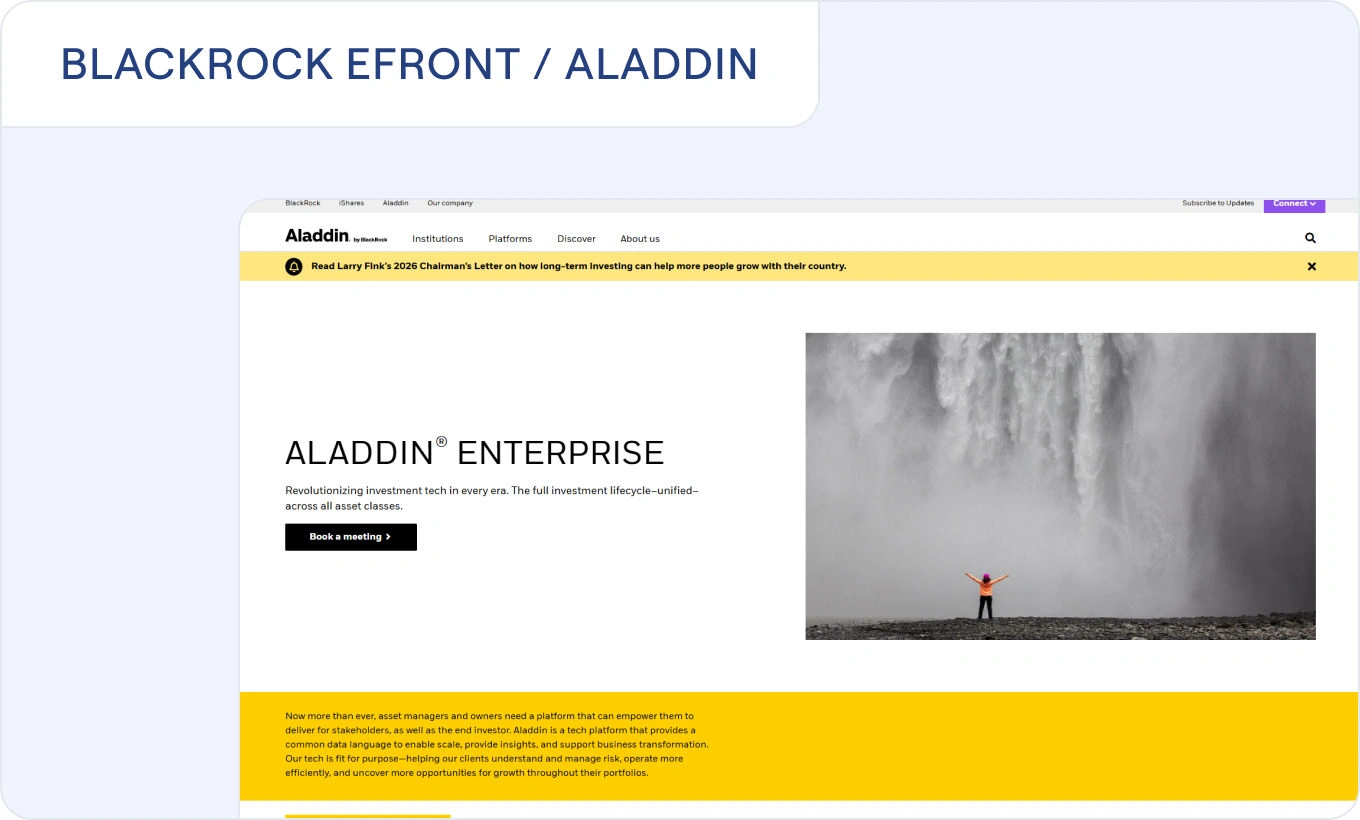
BlackRock eFront, within the broader Aladdin ecosystem, provides private markets capabilities alongside wider Aladdin portfolio and risk workflows.
Best for: Large institutions operating within the Aladdin ecosystem
Strengths:
- Private markets capabilities within a broader platform
- Portfolio monitoring and risk analysis
- Integration with broader investment workflows
Integrations to validate: Aladdin ecosystem, internal systems, custodians
Implementation effort: High, platform-wide integration requirements
BlackRock eFront supports institutions seeking private markets reporting within a broader investment platform.
Private capital suite (fund accounting + monitoring + investor reporting)
This category includes platforms that combine fund accounting, investor reporting, and portfolio monitoring. Some are accounting-led and designed for GPs or administrators, while others are more modular, spanning LP portfolio management, valuation workflows, and broader reporting use cases. As a result, these tools do not all serve the same role. They are most relevant where reporting is closely tied to accounting processes, investor communications, or multi-system data coordination.
Allvue Systems
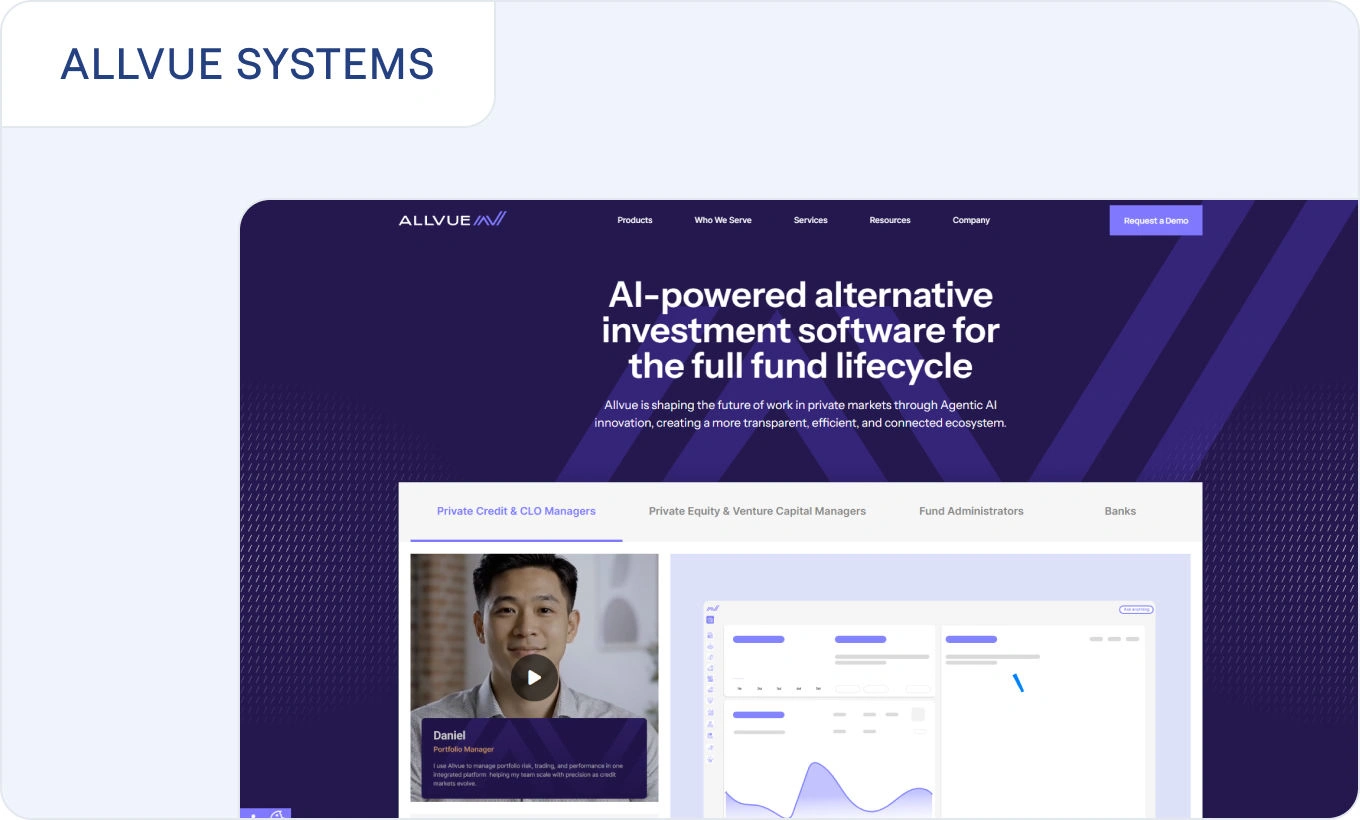
Allvue provides a platform that combines fund accounting, investment accounting, and portfolio monitoring with investor reporting capabilities.
Best for: Firms combining fund accounting with reporting and monitoring
Strengths:
- Fund and corporate accounting
- Portfolio monitoring
- Investor reporting tools
Integrations to validate: Fund admins, accounting systems, investor portals
Implementation effort: High, driven by accounting complexity and fund structures
Allvue supports organizations seeking integrated fund accounting and reporting capabilities.
Dynamo
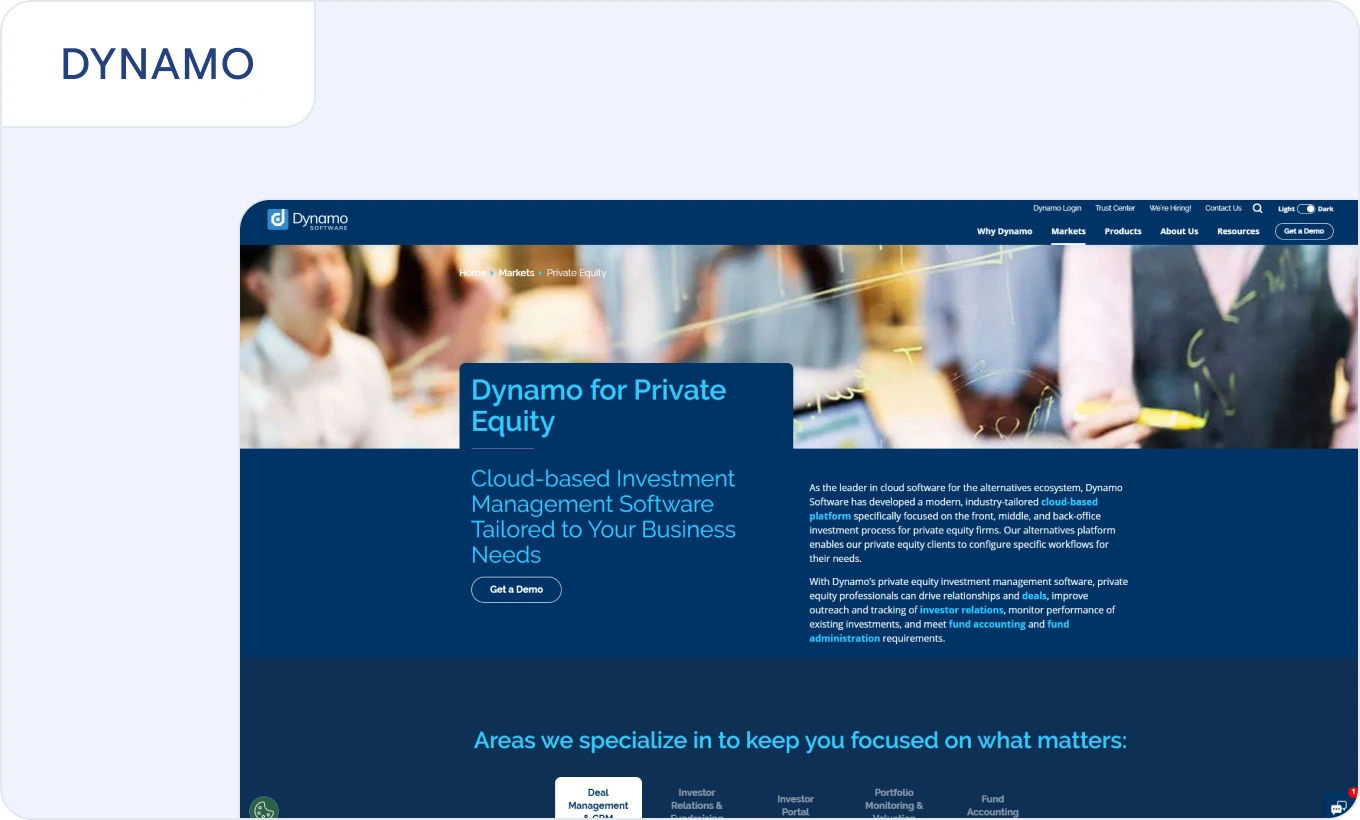
Dynamo offers a modular platform covering portfolio monitoring, valuation workflows, and LP portfolio management, with flexibility across different use cases.
Best for: Firms needing modular portfolio monitoring and reporting workflows
Strengths:
- Portfolio monitoring and valuation workflows
- LP portfolio management modules
- Flexible platform structure
Integrations to validate: CRM, fund data sources, reporting outputs
Implementation effort: Medium, varies by modules selected
Dynamo supports firms seeking configurable portfolio monitoring and reporting workflows.
FIS Private Capital Suite (formerly Investran)
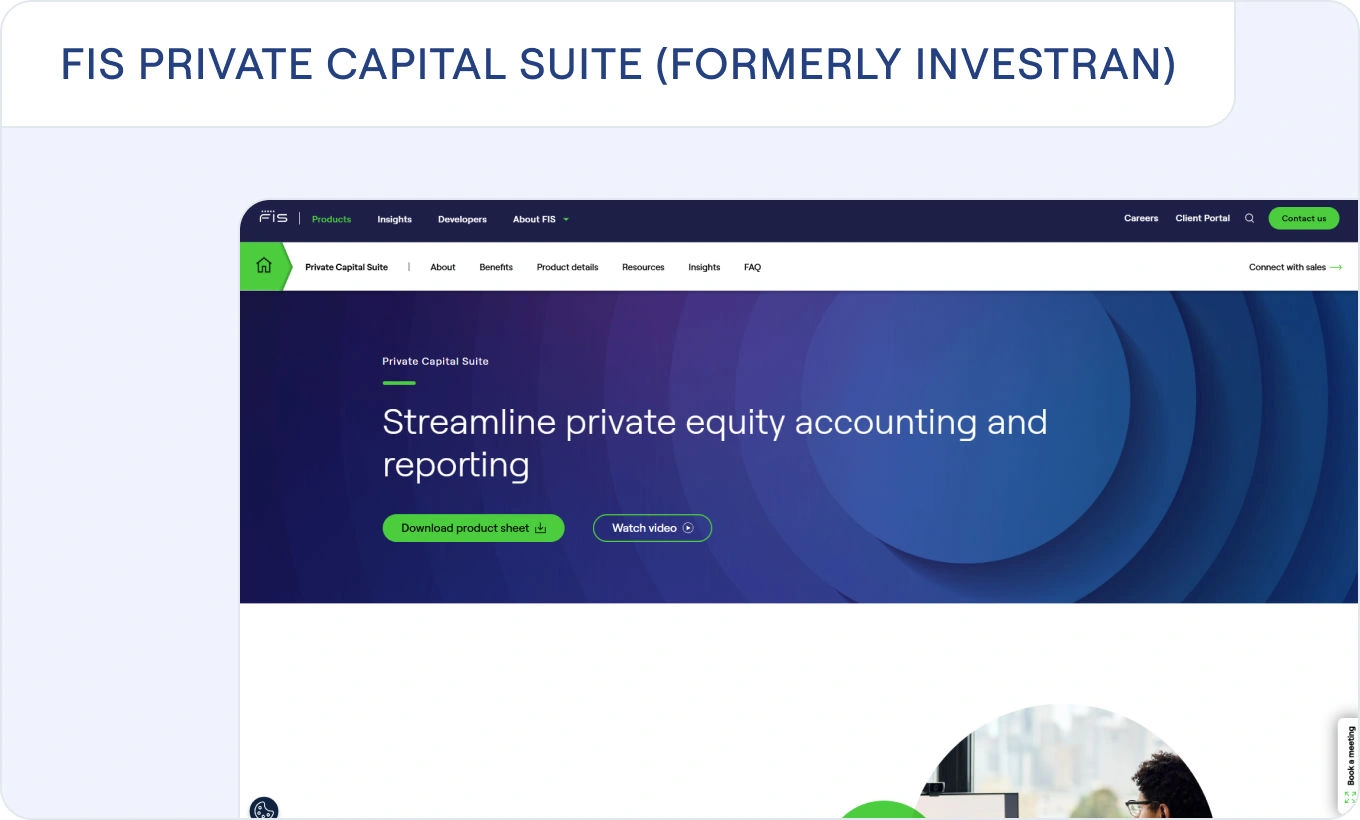
FIS Private Capital Suite is a fund accounting and investor reporting platform widely used by fund administrators and private capital firms.
Best for: Fund administrators and GPs with accounting-led reporting needs
Strengths:
- Fund accounting
- Investor reporting
- Operational workflows
Integrations to validate: Accounting systems, investor portals, fund data pipelines
Implementation effort: High, driven by accounting and operational scope
FIS Private Capital Suite supports firms seeking fund accounting and investor reporting capabilities.
LP document and notices capture (timely updates input layer)
This category focuses on improving the timeliness and structure of incoming data. These tools ingest capital call notices, distribution notices, and statements, helping teams reduce manual data entry and improve consistency in reporting inputs.
Hercules
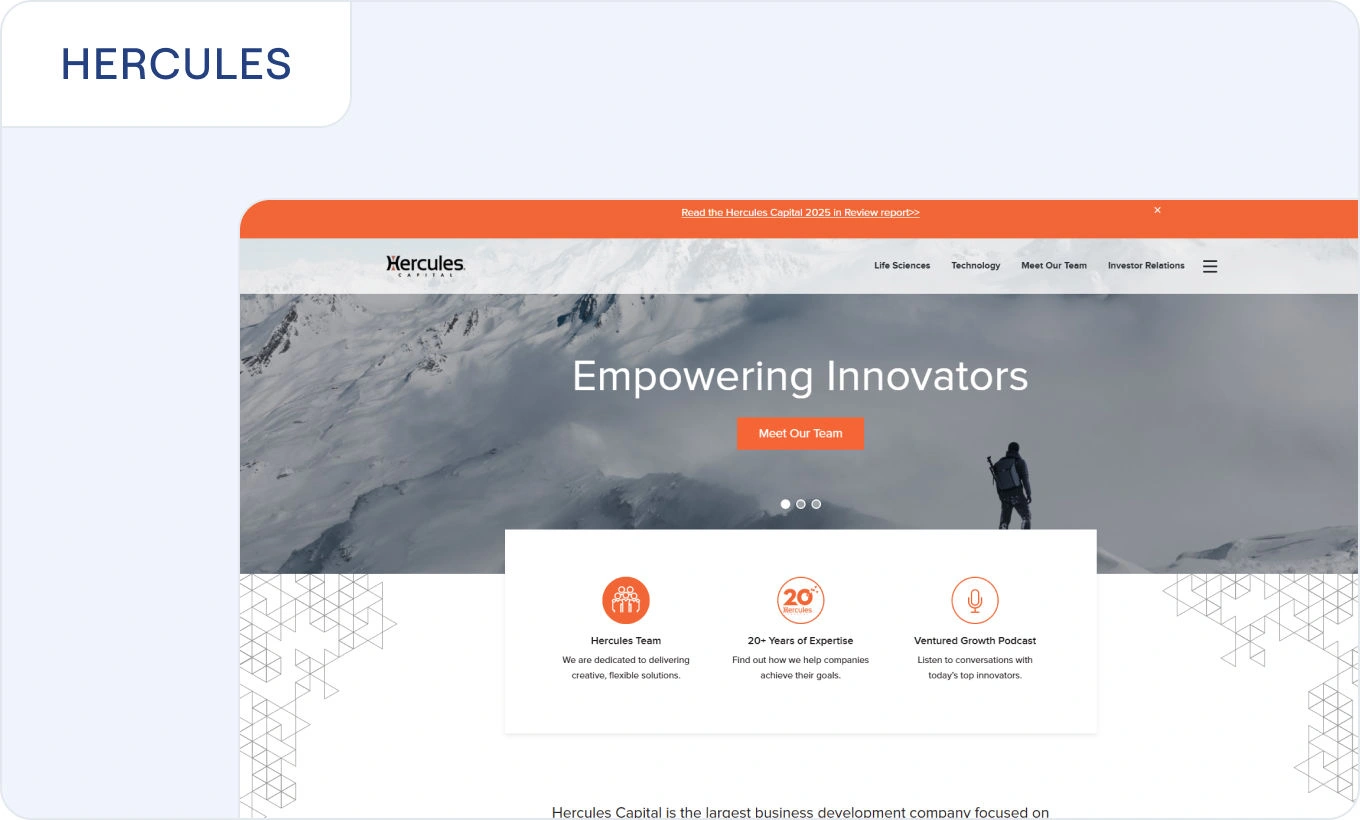
Hercules focuses on ingesting and structuring capital call and distribution notices to support downstream reporting workflows.
Best for: Teams focused on capital call and distribution notice ingestion
Strengths:
- Notice ingestion and extraction
- Data validation workflows
- Structured input layer for reporting
Integrations to validate: Email inboxes, document sources, exports
Implementation effort: Medium, depends on document volume
Hercules supports teams seeking structured ingestion of capital call and distribution notices. This is primarily an input-layer workflow tool rather than a full private markets analytics platform.
Canoe Intelligence
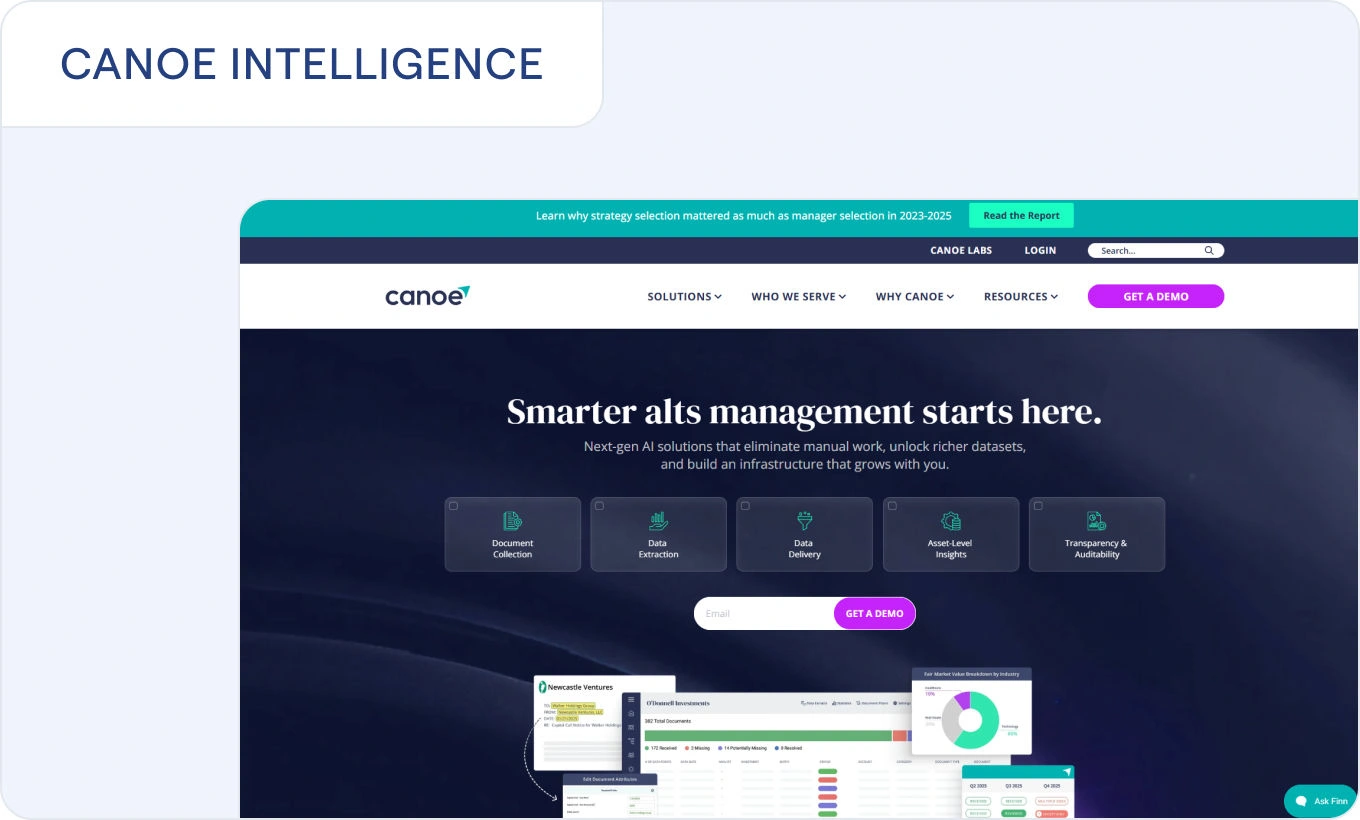
Canoe Intelligence provides document collection and data extraction tools for private markets, helping standardize information from GP communications.
Best for: Automating document collection and extraction workflows
Strengths:
- Document collection across sources
- Extraction for capital calls and statements
- Data standardization support
Integrations to validate: GP portals, inboxes, APIs
Implementation effort: Medium, driven by document source complexity
Canoe Intelligence supports organizations seeking document-driven data extraction for private markets.
Family office platforms that support PE reporting workflows (SFO operating layer)
This category focuses on the internal operating layer for family offices. Rather than replacing GP reporting, these platforms help teams organize data, track private investments, and maintain consistent internal records across entities.
Asora
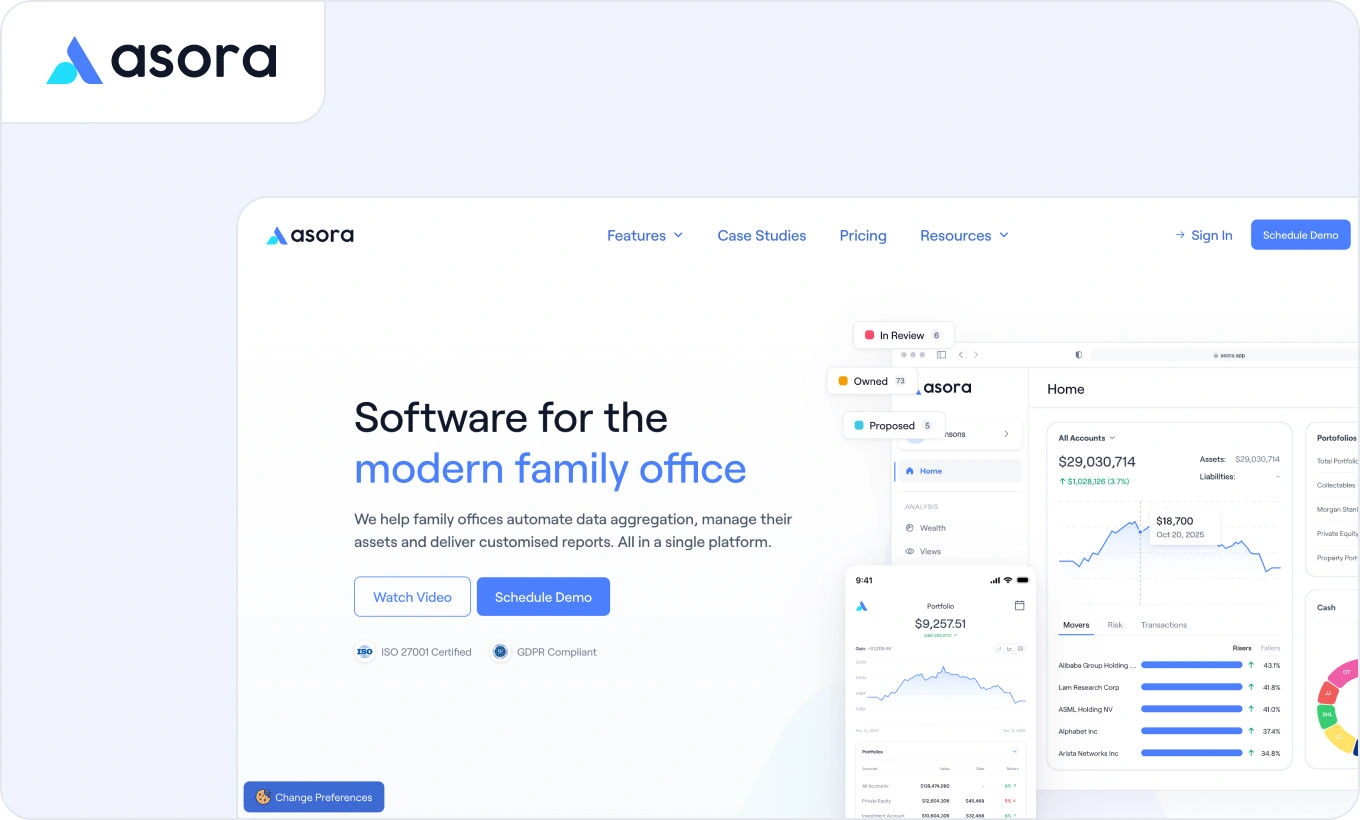
Asora is a wealth platform designed for UHNWIs and lean single family offices, providing a flexible solution to track private investments, support internal reporting workflows, and maintain structured portfolio information across entities. This is supported by structured data inputs, including automated data aggregation across bank accounts and investment sources.
Best for: Lean single family offices managing multi-entity private investments
Strengths:
- Private asset tracking across entities
- Document storage and linkage
- Workflow support for internal reporting processes
- Consolidated wealth view across asset classes
Integrations to validate: Custodians, document sources, exports
Implementation effort: Low to medium, depends on entity structure and data history
Asora supports private investment reporting workflows for lean SFOs, helping teams track, link, and organize data without institutional overhead.
The Three Common Categories of Private Equity Reporting Software
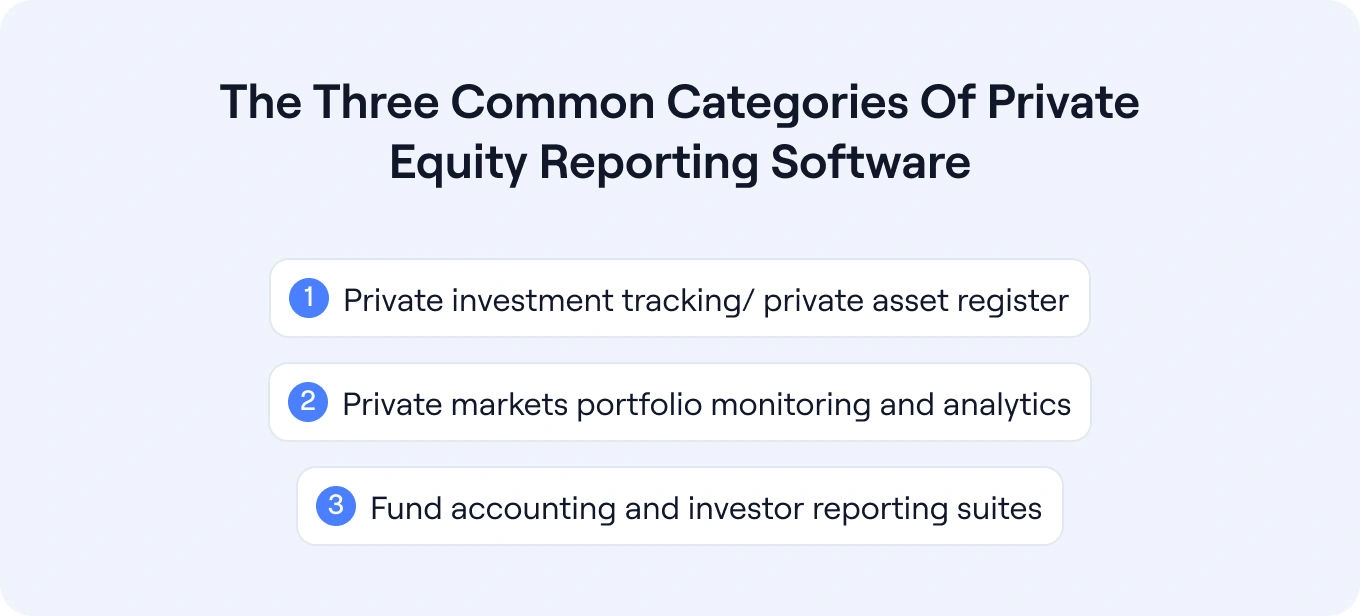
Before shortlisting tools, it helps to understand the categories. Many buyers evaluating reporting software and private equity solutions select tools that do not match their actual reporting problem.
1) Private investment tracking/ private asset register
This category focuses on maintaining a structured record of private investments.
Its purpose is straightforward: track commitments, unfunded commitments, capital calls, distributions, and manager-reported NAV or fair value by effective date. It also ensures that source documents, such as notices and statements, are linked to each record.
This approach works best when the challenge is operational:
- Missing or delayed updates
- Scattered PDFs and email-based workflows
- Inconsistent tracking across entities
These tools create a reliable internal register, which becomes the foundation for reporting.
2) Private markets portfolio monitoring and analytics
The second category expands beyond tracking into structured data management and analytics. These platforms standardize private markets data collection, support performance monitoring, and enable repeatable reporting across multiple funds and managers. In some cases, they also support internal valuation workflows.
This category is typically used when teams require:
- Portfolio-level analytics across dozens or hundreds of funds
- Structured data capture for consistency
- Benchmarking and peer comparisons
- More formalized reporting processes
Examples include:
- S&P Global iLEVEL
- Chronograph
- CEPRES
- BlackRock eFront / Aladdin
While there is overlap, CEPRES is often positioned more strongly around benchmarking and market intelligence, whereas iLEVEL and Chronograph are more closely aligned with portfolio monitoring and reporting workflows.
3) Fund accounting and investor reporting suites (GP/fund-ops oriented)
The third category is designed primarily for fund managers and administrators. These platforms support fund accounting, investor reporting, and operational controls. They are typically more comprehensive and process-heavy and are most relevant when reporting requirements are tightly linked to:
- Fund accounting processes
- Investor communications
- Regulatory or operational workflows
Examples include:
- Allvue Systems
- FIS Private Capital Suite (formerly Investran)
Some modular platforms, such as Dynamo, span multiple categories.
For lean LP-focused teams, these platforms can be more than is required. However, they may still be relevant in more complex structures.
Where Asora fits
Asora sits outside the institutional analytics category and instead supports the operational layer of private investment reporting for lean family offices.
Asora is not a dedicated private equity reporting software in the institutional analytics or benchmarking sense. Instead, it supports private investment reporting workflows for lean SFOs, particularly where the need is centralized tracking, entity-level organization (including ownership mapping), document linkage, and consistent internal updates.
In practice, this means teams can maintain a structured internal record of commitments, capital calls, distributions, and valuations, while linking source documents and supporting consistent reporting across entities. This is often where reporting processes break down; not in analytics, but in fragmented data, scattered documents, and inconsistent internal tracking.
For lean teams, establishing this foundation can improve reporting cadence and internal control. However, it does not remove reliance on manager-provided data or the typical quarterly valuation cycle that underpins private equity reporting.
Feature Checklist for PE Reporting in a Family Office
Selecting private equity reporting software, including private equity fund reporting software used by larger firms, requires focusing on practical capabilities rather than feature volume.
At a minimum, the platform should support:
- Commitments and unfunded tracking
- Capital call and distribution workflows, with entity attribution
- Valuation snapshots with effective dates
- Cashflow date handling for IRR and DPI calculations
- Consistent treatment of contributed capital, distributions, and current value for MOIC/TVPI calculations
- Multi-entity aggregation and household-level reporting logic
- Document capture and retrieval, including notices and statements
- Identification of gaps, such as missing statements or stale valuations
- Reporting outputs that support both summaries and drill-down
For lean teams, these features often matter more than advanced analytics.
Implementation Realities
Implementation is where many private equity reporting software projects either deliver value quickly or become difficult to maintain. The difference is rarely the tool itself; it is usually the quality of inputs and the clarity of internal ownership.
In practice, most implementations follow a similar sequence; teams start by identifying what data actually exists across fund administrators, GP portals, and internal records. From there, they define a consistent fund list, map entities and ownership structures, and decide how much historical data to bring into the system.
A typical implementation will include:
- Data inventory across documents, spreadsheets, and external providers
- Fund and investment list creation, including commitments and structures
- Entity and ownership mapping across trusts, limited partnership entities, and holding vehicles
- Historical data import, where required for performance reporting
- Quality assurance to validate cashflows, valuations, and mappings
- A first reporting cycle to test outputs and identify gaps
While this sequence is relatively consistent, the effort required varies significantly. The number of entities, the depth of historical data, and the consistency of existing records all influence how long it takes to reach a reliable reporting baseline.
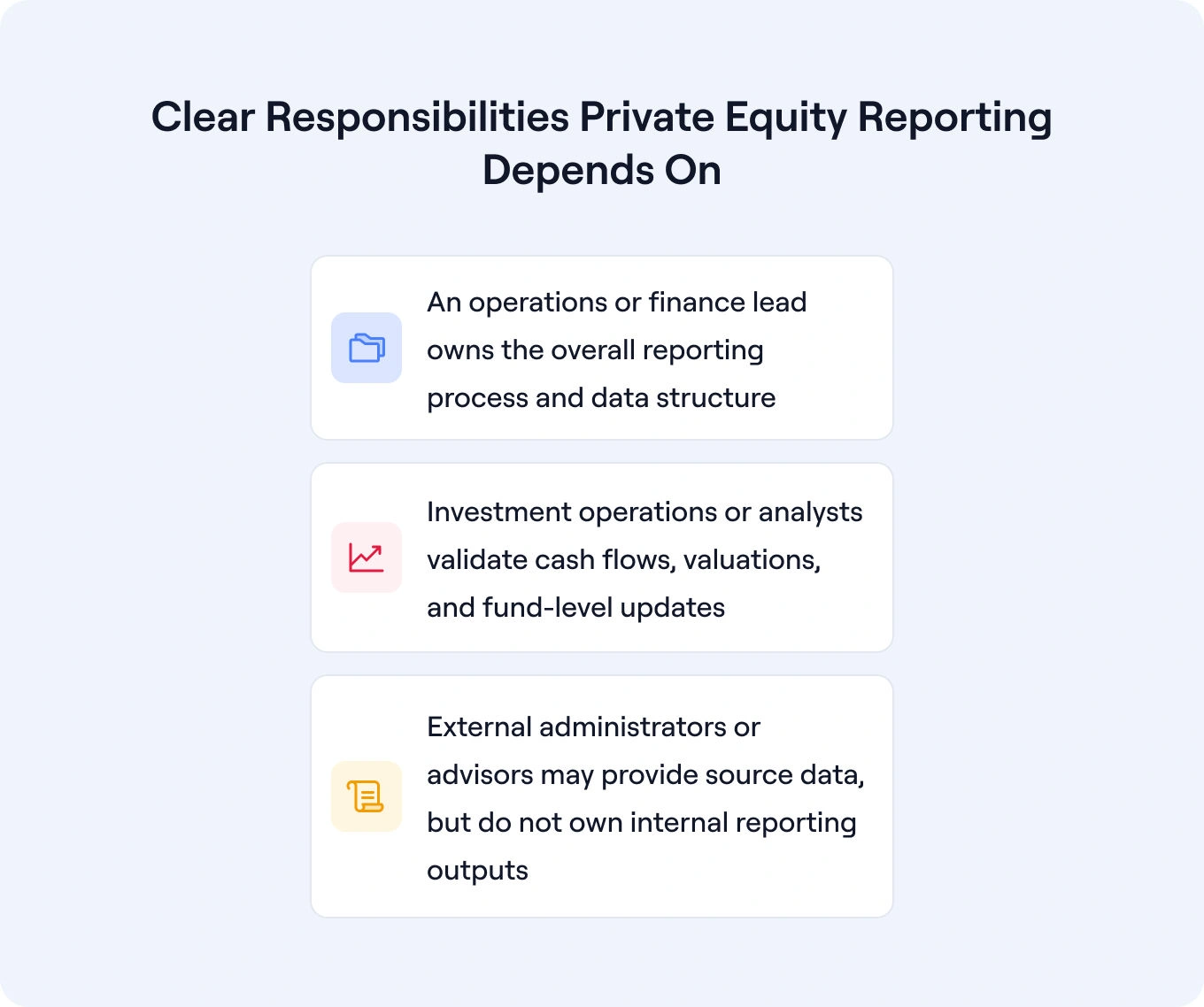
Just as important as the steps themselves is internal ownership. Private equity reporting does not run on software alone; it depends on clear responsibility across the team. In most family offices and lean investment teams, this typically means:
-
An operations or finance lead owns the overall reporting process and data structure
-
Investment operations or analysts validate cash flows, valuations, and fund-level updates
-
External administrators or advisors may provide source data, but do not own internal reporting outputs
This division matters because many reporting issues are not technical; they are process-related. Missing statements, inconsistent valuation dates, or unclear entity mappings need to be identified and resolved internally, even when software is in place.
Private equity reporting software can support these workflows by structuring data, linking documents, and making gaps more visible. However, it does not remove the need for internal review, nor does it change the underlying cadence of GP reporting.
Final Thoughts: Buyer’s Next Steps
Shortlisting private equity reporting software is only one part of the process. This is particularly relevant when considering what a family office typically manages and how single family office structures evolve over time.
The more important step is validating whether a platform aligns with how your reporting actually works in practice, across data sources, entities, and internal ownership.
At this stage, the focus should shift from features to inputs. Private equity reporting depends on a combination of GP-provided data, internal records, and document flows, all of which follow different cadences and formats. Before committing to a tool, it is worth confirming how these inputs will be handled.
In practical terms, this means pressure-testing a few core areas:
- Where data is coming from (GP portals, fund administrators, internal records), and how often it updates
- How valuation effective dates are stored and applied across reporting periods
- How cash flows are attributed to the correct entities and investment records
- How multi-entity aggregation is handled at the household level
- What reporting outputs look like, including exports and drill-down capability
These are not edge cases; they are the core of whether reporting will remain consistent over time. It is equally important to identify potential points of friction early. Many issues only become visible after the first reporting cycle, when gaps in data or process start to surface.
Common red flags include:
- Manual rekeying as a default workflow rather than an exception
- Limited support for handling valuation effective dates consistently
- No clear ownership of missing data or unresolved gaps
- Export formats that are difficult to adapt for internal or external reporting
For many family offices, the underlying issue is not a lack of analytics but a lack of structure. This becomes more important as reporting supports longer-term objectives such as generational wealth planning, where consistent data and clear structures underpin decision-making. Offices also need consistent reporting across entities, generations, and decision-makers.
Many teams are also evaluating newer workflow, extraction, and reporting tools, although the underlying data dependencies in private markets remain unchanged. Data arrives in different formats, documents are stored across inboxes and drives, and follow-ups are tracked informally.
This is where Asora fits within the reporting stack. When the primary challenge is fragmented updates and inconsistent tracking, centralizing private asset records, linking documents, and supporting internal workflows can improve reporting cadence and internal control. Asora supports this operating layer for lean SFOs, helping teams maintain a consistent internal record across entities and investments.
That said, it is important to stay grounded in how private equity reporting works. Centralizing data improves visibility and follow-up, but it does not remove reliance on manager-provided data or the typical quarterly valuation cycle.
For teams looking to assess this in practice, it is often useful to walk through a live example of how private investments, documents, and entity structures can be organized in one place. Request a demo of Asora to see how private investment data, documents, and entity structures can be tracked, linked, and maintained in a consistent internal record.
FAQ
Can private equity reporting be real-time?
No. In the private equity industry, reporting depends on general partners and fund managers, who typically provide updates quarterly, with interim cashflow notices. While some private equity software offers timely data collection and improved visibility through dashboards, it does not provide real-time visibility in the way public market systems do.
Do these tools replace manual review?
No. Private equity reporting software can support data collection, automated workflows, and investor reporting processes, but validation, investment accounting checks, and reconciliation remain team-led. This is particularly important for maintaining internal control, reconciliation discipline, and consistency across portfolio data and reporting outputs.
Which type of tool is best for a family office?
It depends on the team’s structure and investment strategy. Lean teams often prioritize a unified platform that supports portfolio data tracking, document management, and fund reporting, while larger or more institutional teams may require deeper analytics, workflow automation, and more formal reporting infrastructure.
Where does Asora fit in this landscape?
Asora supports private equity reporting workflows for lean family offices by providing a unified platform to track investments, link documents, and manage portfolio information across entities. It helps improve data organization, internal reporting consistency, and internal control, without positioning itself as institutional private equity software for benchmarking or real-time analytics.
.jpg)
.png)
 ISO 27001 Certified
 GDPR Compliant