



Author
Table of contents
"What used to take hours or days is now done in minutes"

Manual data aggregation consumes valuable time and introduces errors across family office operations. Automated data aggregation tools consolidate financial data from multiple sources into one platform, providing timely insights, reducing manual data entry, and freeing finance analysts to focus on strategic work.
Family offices manage complex wealth across dozens of accounts, custodians, currencies, and asset classes. Each month, teams spend countless hours gathering raw data from bank portals, brokerage statements, and investment managers—only to manually input everything into spreadsheets for reconciliation, reporting, and analysis.
This manual data aggregation process:
As data volumes grow and portfolios become increasingly complex, the limitations of manual methods become impossible to ignore.
That’s where family office software can help. Automated data aggregation and reporting systems can extract data from multiple sources, consolidate information into a unified dataset, and deliver actionable insights with minimal manual intervention.
Below, we’ll look at why automated data aggregation has become non-negotiable for efficient family office operations.
Most family offices don't realize how much time they lose to manual data collection. A common pattern in spreadsheet-driven offices looks like this:
Week 1: Download statements from multiple custodians, banks, and investment managers; chase missing statements; export files and convert PDFs to spreadsheets.
Week 2: Manually enter transaction data; cross-reference account balances; hunt for discrepancies; fix data-entry errors.
Week 3: Build the consolidated reporting workbook (multi-entity roll-ups), standardise information (chart-of-accounts mapping, naming conventions, classifications), calculate performance (TWR/IRR), and reconcile cash flows; update entity ownership as needed (e.g., after restructurings, new vehicles, estate-planning changes).
Week 4: Generate reports for stakeholders; answer questions about data accuracy; make last-minute corrections before distribution.
This data aggregation process can consume dozens of hours per month in spreadsheet-driven environments, especially with multiple entities/custodians and private assets; time that could be spent on strategic planning, trend analysis, or serving family members.
Plus, that doesn't account for the not-so-obvious costs:
Data aggregation automation fundamentally changes how family offices handle information. Instead of manually gathering data from multiple sources, automated tools connect directly to custodians, banks, and investment platforms to pull information on a schedule. Note: some feeds are event-driven (update as activity occurs), others are batch-based (update on set intervals), and refresh frequency varies by institution and by data type. For example, positions may be updated daily, transactions post after clearing, and prices may be end-of-day or intraday, depending on the source.
Here's what data aggregation looks like in practice:
Modern data aggregation tools connect to a broad range of institutions via a mix of APIs, file feeds, and custodian integrations; coverage and methods vary by vendor. Rather than logging into separate portals, the system automatically extracts data, handling authentication and data flow without manual intervention.
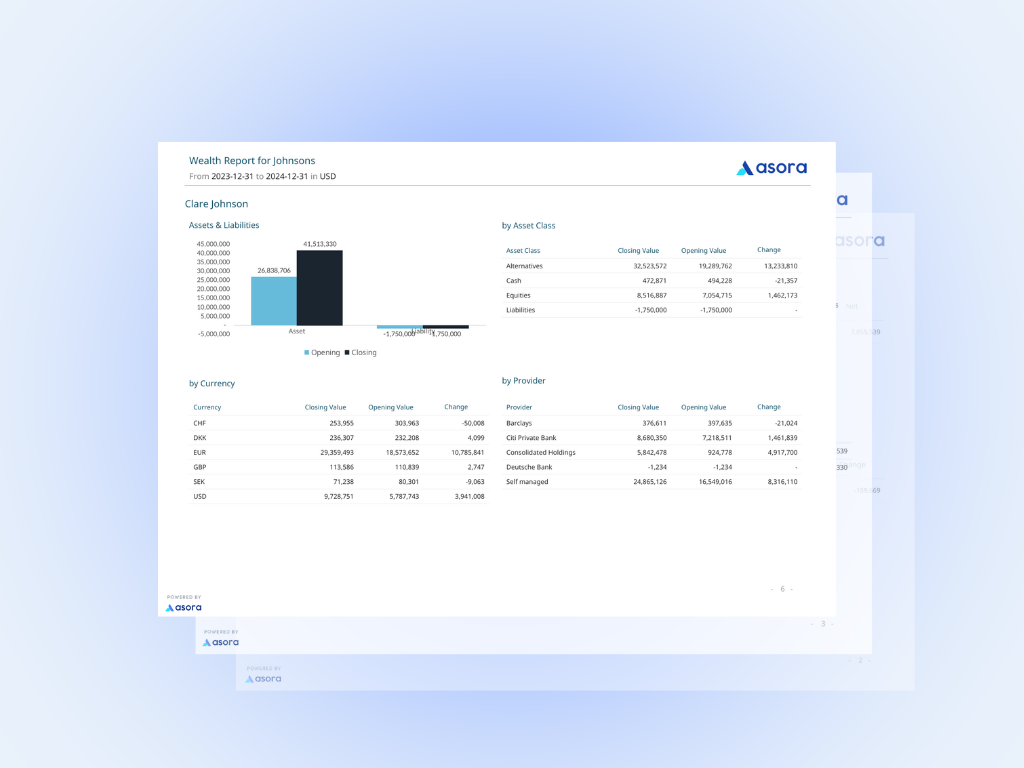
Asora's data aggregation supports connections to banks and custodians globally, consolidating portfolio data into one secure platform. Holdings, transactions, and valuations refresh on a timely schedule, with no spreadsheets required.
Automated data aggregation transforms disparate data sources into a unified dataset with consistent formatting. The system handles:
This automated data transformation eliminates hours of manual reconciliation work.
Automated systems offer continuous visibility: near-current positions and performance for liquid assets, and the latest available valuations and cash-flow updates for private assets, with clear freshness indicators (timestamps and source) on every data point.
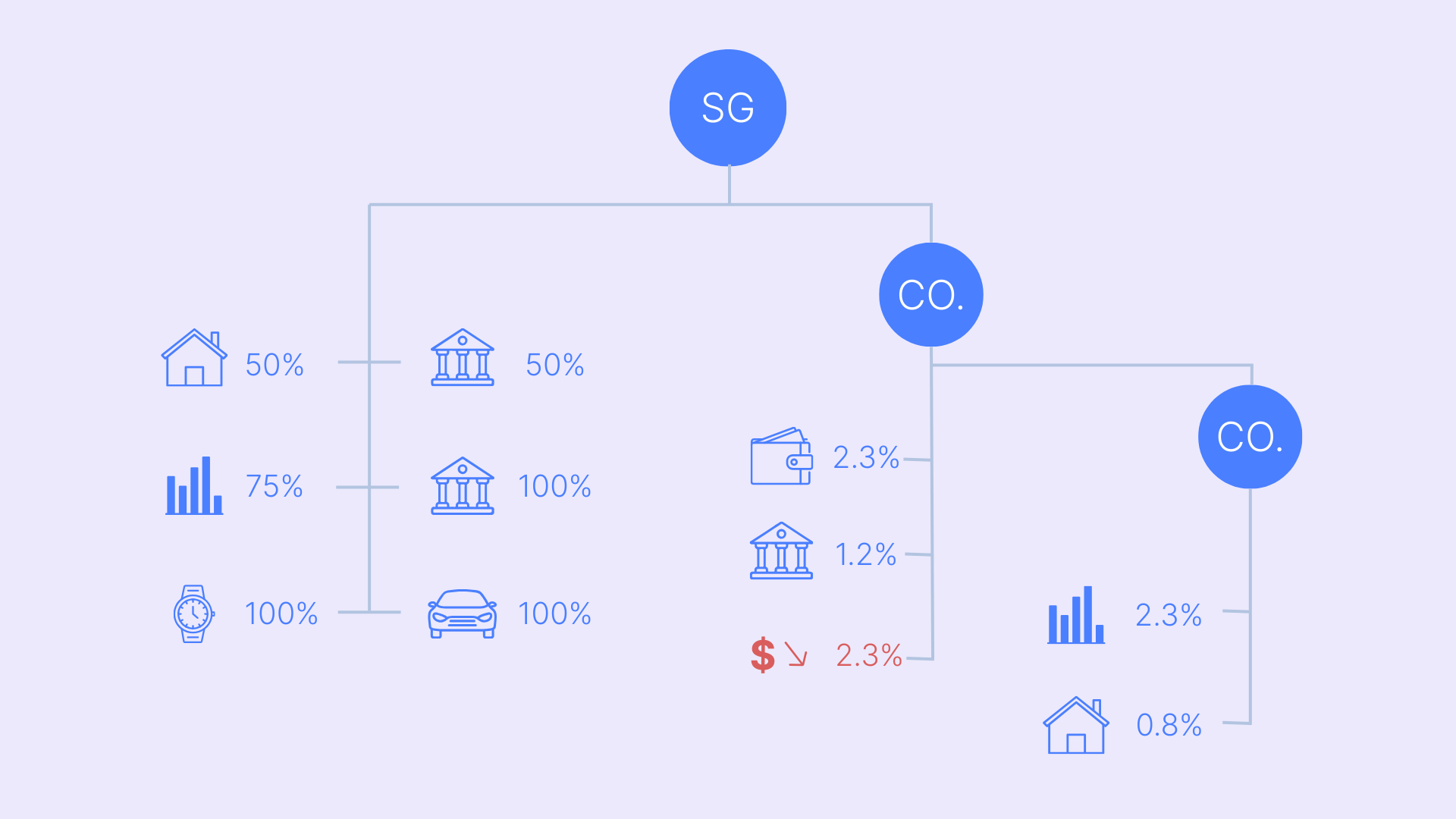
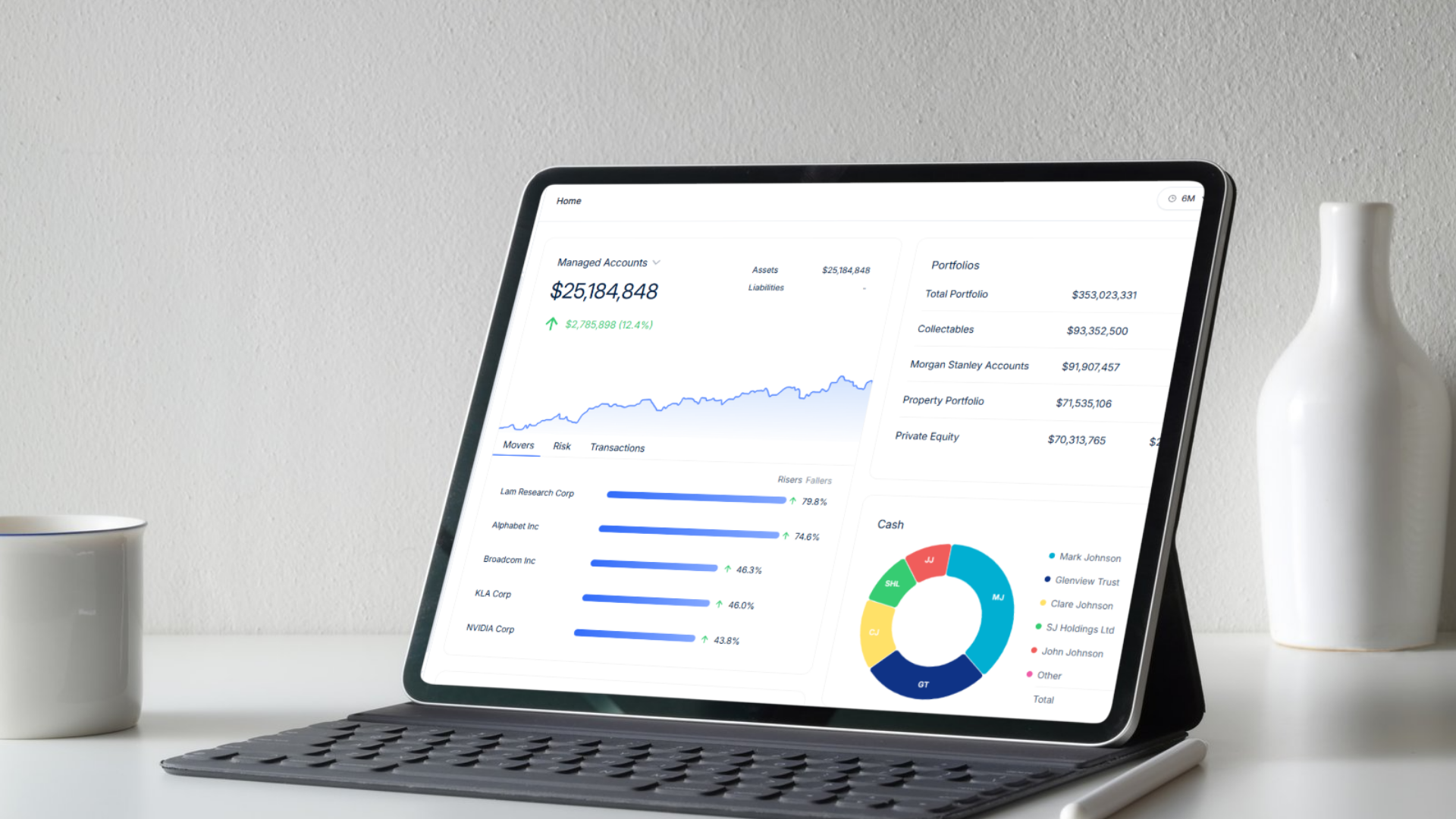
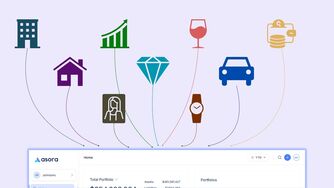
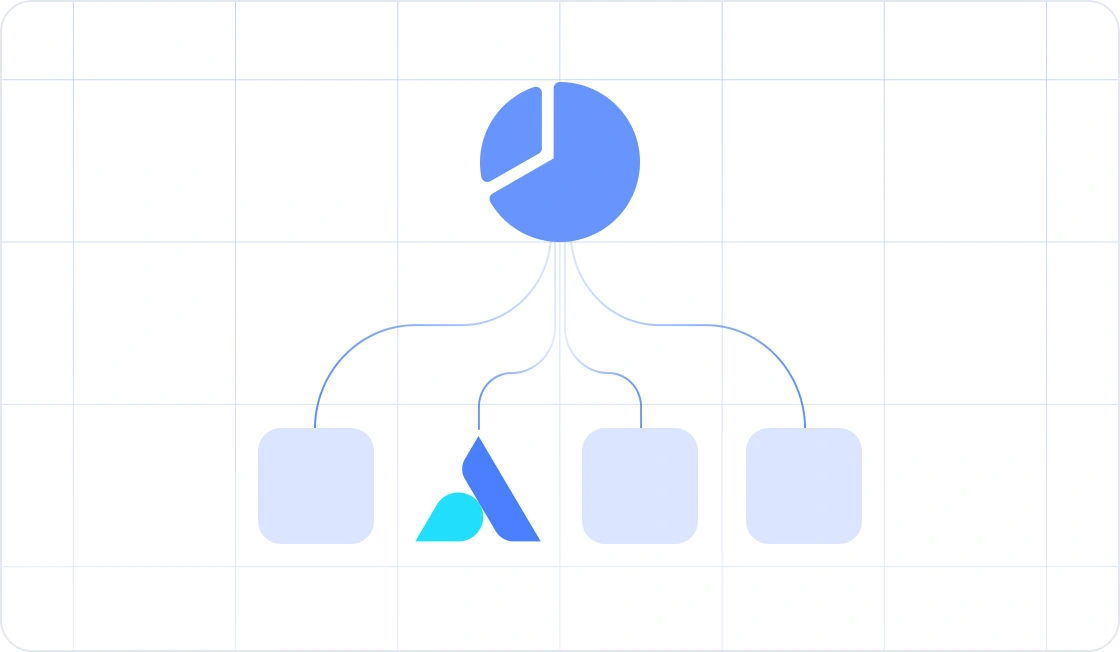
Asora's Wealth Map helps family offices create comprehensive visualizations of their wealth. It automates data capture from multiple sources and provides interactive mapping tools designed specifically for complex family wealth structures.
The most immediate benefit is time recovered from manual processes. In one case study, Capstone Family Office reported reducing monthly reporting from days to under 10 minutes after automating data aggregation. Results will vary based on data complexity, private-asset mix, and governance requirements.
That freed capacity allows data teams to focus on meaningful analysis:
While automation cuts manual errors across collection and consolidation, accuracy still depends on reconciliation routines, exception handling, and scheduled data-quality checks. Transactions flow directly from custodians without manual data entry, reducing mistakes in:
Better data quality leads to more reliable financial reporting and confident decision-making.
Manual aggregation often leaves gaps with forgotten accounts, delayed updates, or incomplete alternative investment data. Automated systems consolidate data from multiple sources, providing comprehensive portfolio visibility.
Asora tracks liquid and private assets in one place. Liquid holdings update automatically through custodian/bank integrations, while private assets typically require guided, manual inputs (e.g., capital calls, valuations) supported by templates, document links, and audit trails.
As families add new assets, open accounts, or establish entities, automated aggregation scales without extra lift from the team. New custodian links are provisioned through a controlled onboarding process, covering permissions, mapping, reconciliation, and validation, so users don’t have to assemble data manually.
This scalability supports growing data volumes without proportional increases in operational workload.
With clean, aggregated data flowing automatically, finance analysts can shift from data collection to data analytics. Automated systems enable:
These capabilities transform data aggregation from an administrative burden into a strategic asset.
Not all data aggregation tools are created equal. When evaluating options for your family office, consider:
As family offices embrace digital transformation, data aggregation with scheduled feeds has shifted from optional convenience to operational necessity. The best data aggregation tools now incorporate:
These advanced capabilities can bring more institutional-grade controls and analytics where the family office needs them, while keeping workflows proportionate to team size and governance style.
See Asora in Action
Schedule a demo with Asora to see how we consolidate financial data from all custodians and asset classes, eliminate manual reporting, and provide timely portfolio visibility and improved data management.
Lorem ipsum dolor sit amet, consectetur adipiscing elit. Suspendisse varius enim in eros elementum tristique. Duis cursus, mi quis viverra ornare, eros dolor interdum nulla, ut commodo diam libero vitae erat. Aenean faucibus nibh et justo cursus id rutrum lorem imperdiet. Nunc ut sem vitae risus tristique posuere.
Data aggregation and automation for finance analysts eliminate manual data entry, reduce errors, and free analysts to focus on strategic work. Instead of spending days collecting raw data and building spreadsheets, analysts can immediately access clean, aggregated data for trend analysis, performance metrics, and advanced analytics. This shift from big data collection to data analysis delivers better investment insights and faster decision-making.
Data automation and aggregators work together but serve different functions. Data aggregators connect to custodians, banks, fund administrators, and platforms to pull holdings and transactions, normalize and price them, and map the results to entities for reporting, typically without requiring a separate data warehouse or data lake. Data automation involves extracting, transforming, and updating data without manual intervention. Modern data integration platforms combine automated systems that aggregate relevant data points from custodians, banks, and investment managers, delivering timely consolidated views without requiring staff to manually download, format, or reconcile financial data.



.png)
.jpg)

.png)
.png)
.jpg)
.png)

.png)

.png)
.png)
.jpg)

.jpg)
.jpg)
.png)


.jpg)
.jpg)


.png)
.jpg)
.jpg)
.jpg)
.jpg)
.jpg)
.jpg)
.jpg)

.png)
.webp)


.png)
.png)
.png)
.png)
.png)
.png)
.jpg)
.jpg)
.png)
.png)
.png)
.png)
.jpg)
.png)
.png)
.png)
.png)
.png)
.png)
.png)
.png)
.png)
.jpg)
.png)
.png)
.png)
.png)

.webp)